


How FlexErgo Supports the Fabrication Floor
Data centers aren’t built or run by big equipment alone. Somewhere in the process, a person is doing the repetitive, precise, physical work. That might be a rack manufacturer building cabinets, a semiconductor plant handling equipment, or a data center’s own maintenance floor. Torquing bolts. Holding a tool steady for hours. Lifting equipment that’s too heavy for one person but too awkward for two.
Data centers are built on-site, but much of the work that makes them possible happens long before construction begins. Manufacturers produce server racks, electrical cabinets, cooling systems, battery enclosures, switchgear, and modular assemblies in controlled production environments. Repetitive fastening, material handling, and precision assembly happen there every day. That’s where ergonomic arms for data center manufacturing make the biggest difference.
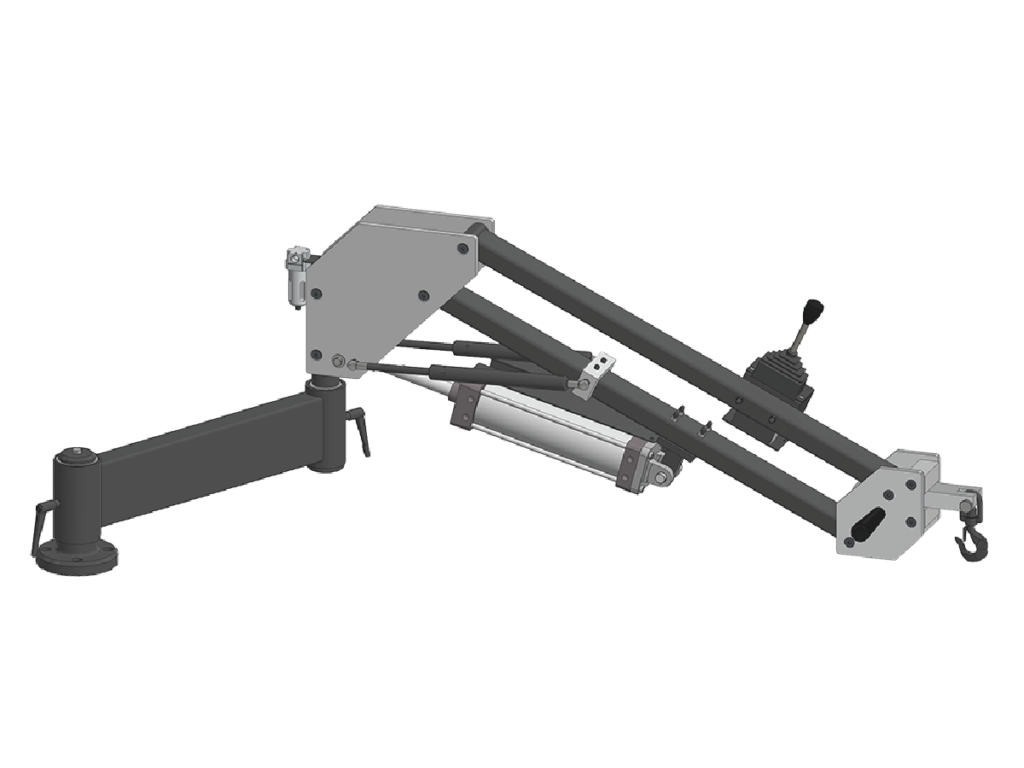
That’s the gap FlexErgo fills. Torque Reaction Arms, Balance Arms, and Part Manipulator Arms can be positioned wherever they’re needed within a shop, fabrication facility, or maintenance area. Still, they’re built for that in-house environment rather than transport to an offsite job site. Here’s where each one fits across the data center supply chain.
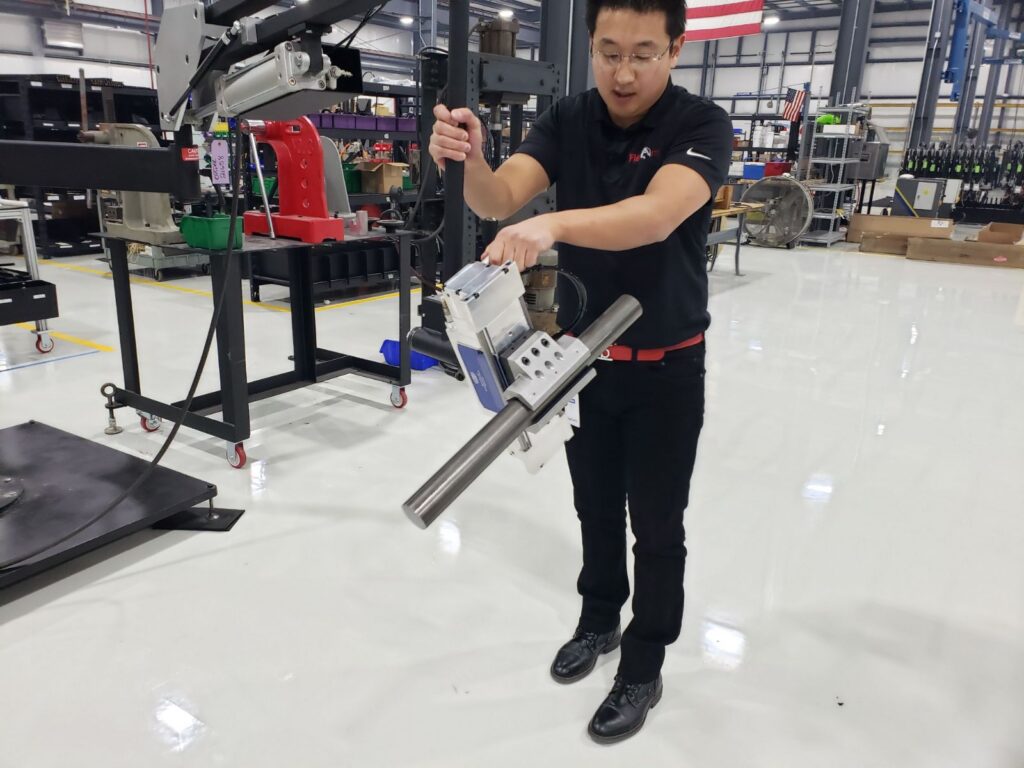
Torque Reaction Arms: Controlled, Repeatable Torque Without the Wear on the Body
Bolted connections are everywhere in the components that go into a data center. Rail kits, cage nuts, cable tray brackets, busbars, containment panels, structural framing- all fabricated and assembled in a shop before they ever reach the data center floor. Every one of those connections needs the right torque, applied the same way, all day long. Do that by hand for a full shift, and it’s the wrists and shoulders that pay for it.
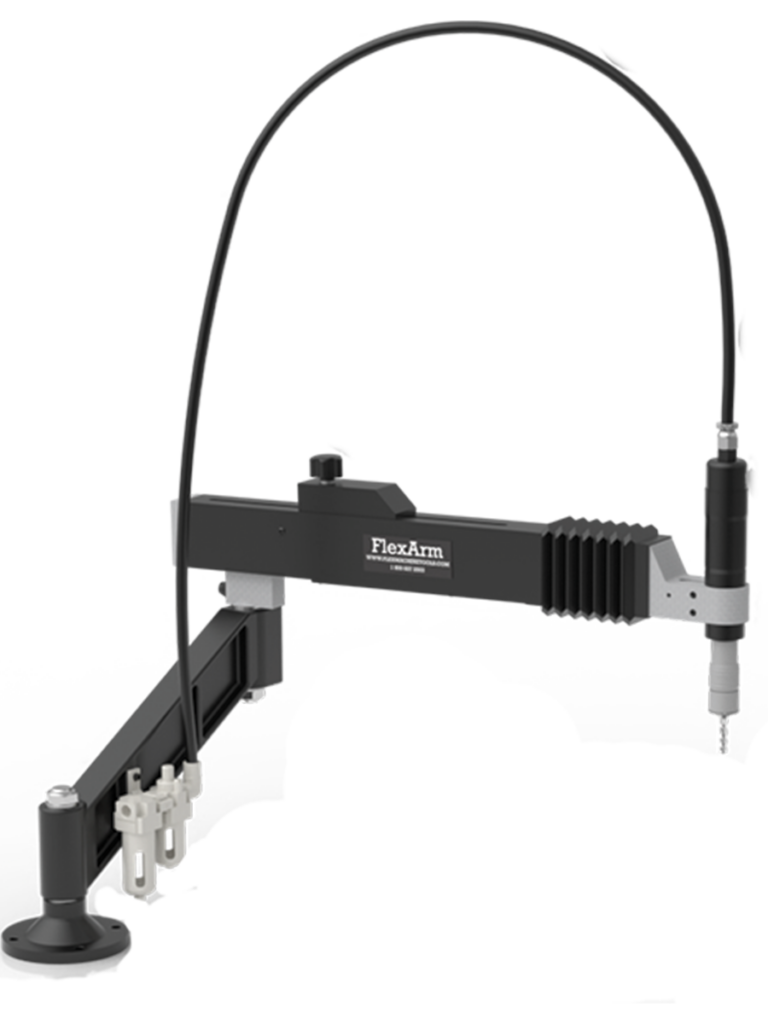
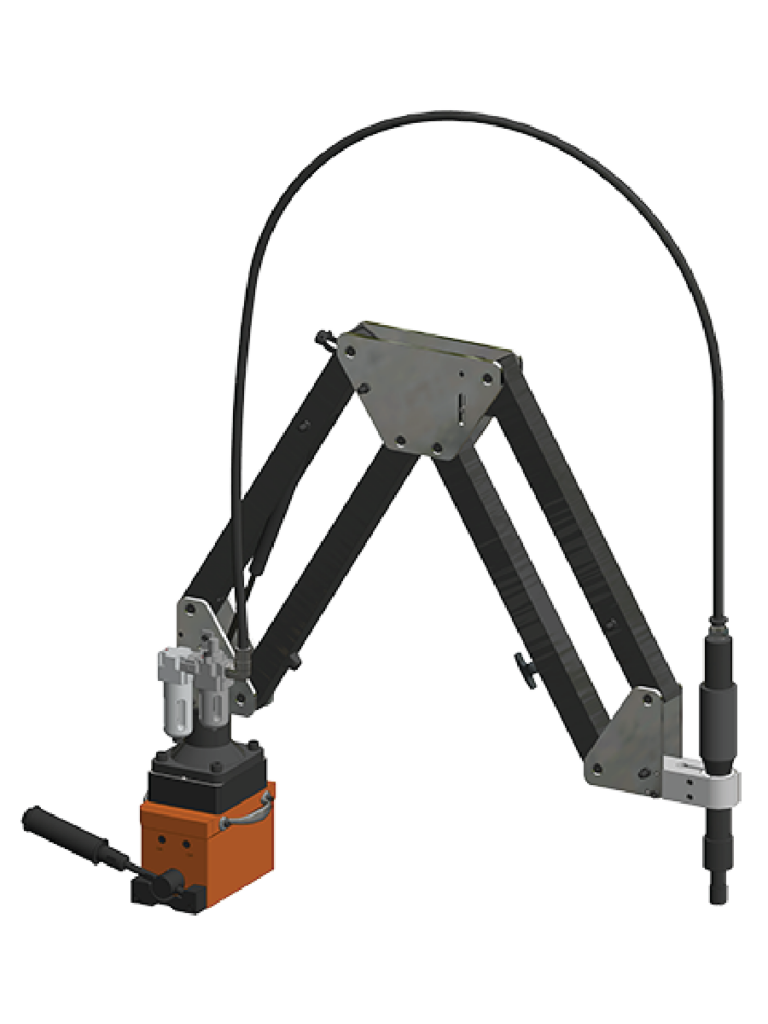
FlexErgo covers both heavy-duty and light-duty Torque Reaction Arms, so the tool matches the job instead of overworking the technician. The fastening tool still drives the fastener and generates the required torque. The Torque Reaction Arm reacts the torque generated by the tool. As a result, the reaction force transfers into the arm instead of the operator, so they can guide the tool with less physical strain.
Where they fit:
- Rack and cabinet fabrication. High-volume fastening on the shop floor without technicians absorbing reaction torque on every fastening cycle.
- Busbar and PDU sub-assembly. Electrical components need consistent torque for code compliance before they ship. Because the arm reacts the torque generated by the fastening tool, operators can maintain consistent tool positioning throughout the shift instead of allowing fatigue to affect performance.
- Containment panel and structural framing assembly. Cable ladder rack sections, containment panels, and bus duct framing all involve repetitive fastening on the shop floor, where repeated exposure to reaction torque can contribute to operator fatigue.
- Immersion cooling tank fabrication. Bolted seams and manifold connections require repeatable torque during assembly.
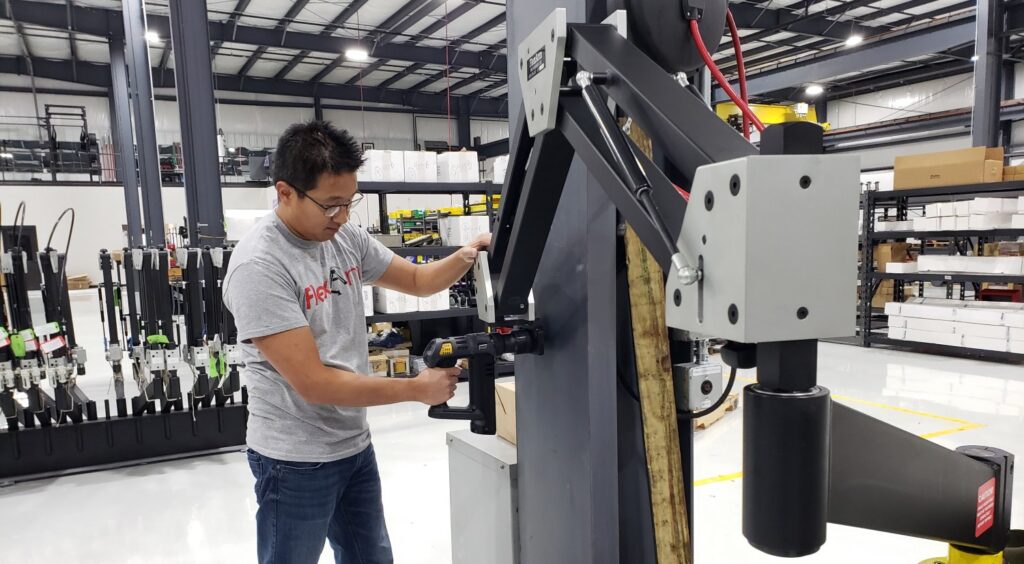
Balance Arms: Counterbalancing the Tools, Not the Equipment
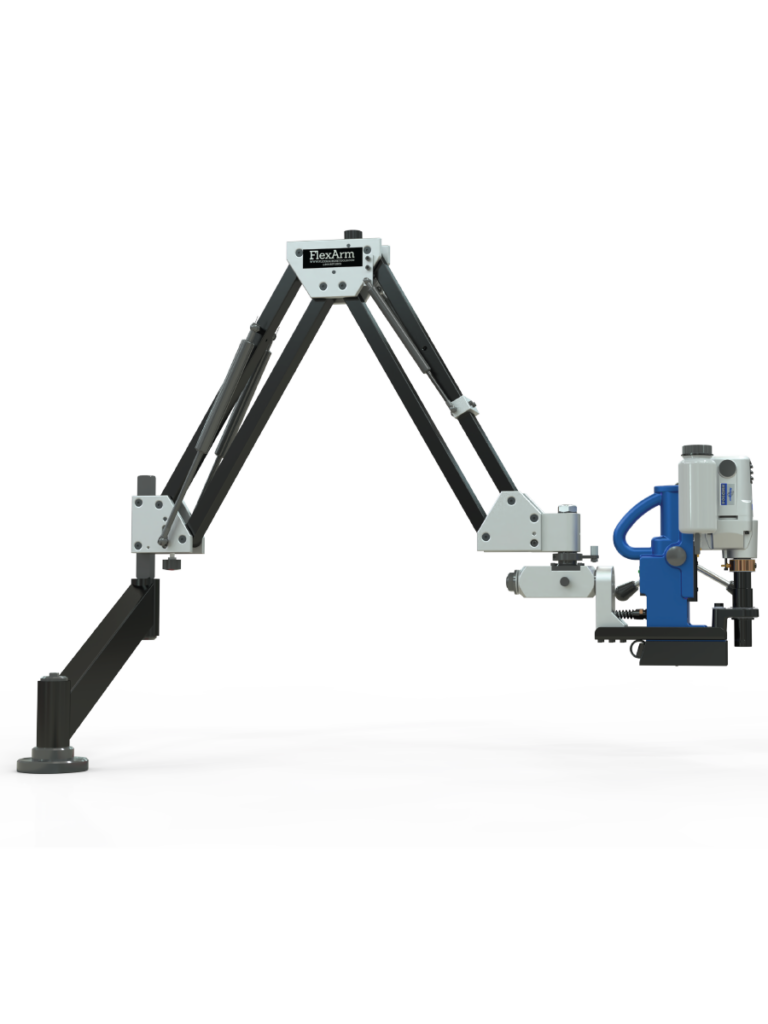
Balance arms take the weight of a tool out of the equation, so a technician can hold and operate that tool in position all day without fighting gravity or losing control of it.
Where they fit:
- Laser marking for labeling. Drive bay numbers, port identifiers, safety warnings, and asset labels all need to be marked directly onto metal panels with precision. The laser marker performs the marking; the Balance Arm simply counterbalances its weight so the operator can guide it accurately throughout the shift.
- Rivet tools for rack assembly. The rivet tool still sets every rivet. The Balance Arm supports its weight so the operator isn’t repeatedly lifting and positioning the tool hundreds of times a day.
- Grinding and finishing fabricated components. Grinding, deburring, and surface finishing often require operators to hold heavier tools in awkward positions for extended periods. A Balance Arm counterbalances the tool while allowing full freedom of movement.
- Any repetitive precision tool work. Anywhere a technician is holding a powered hand tool in position for extended periods, a Balance Arm reduces the physical effort required to support the tool.
The payoff isn’t just operator comfort. Because operators aren’t constantly supporting the weight of the tool, they’re better able to maintain control throughout the shift. That can help reduce accidental drops while improving positioning, consistency, and productivity.

Part Manipulator Arms: Turning a Two-Man Lift Into a One-Man Job
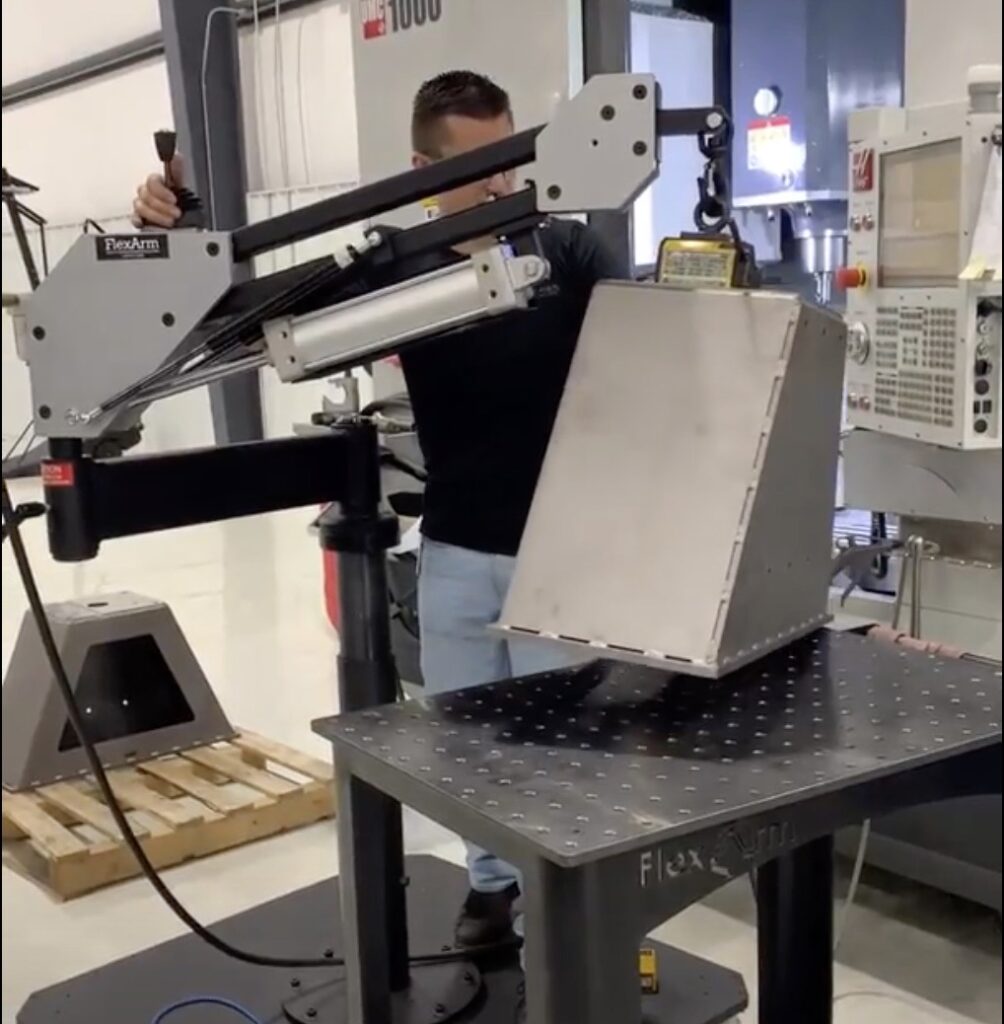
Part Manipulator Arms are the lifting muscle in the lineup, rated to handle equipment up to 200 lbs. Where Balance Arms take weight off a hand tool, Part Manipulator Arms take the weight of the workpiece off the operator, allowing one person to safely lift, rotate, and position components throughout the manufacturing process.
Where they fit:
- Large server cabinet doors and enclosure panels. What once required two people to lift and align can often become a one-person operation, freeing up another technician for higher-value work.
- UPS battery module handling. Battery cabinets are dense and heavy. A Part Manipulator makes assembly, testing, and rework safer and more efficient.
- Cooling equipment housings and electrical enclosure components. Large fabricated parts can be lifted, rotated, and positioned precisely during assembly or inspection.
- Modular unit sub-assembly. Positioning components onto skid-mounted power or cooling modules before the finished unit ships.
- Generator and switchgear component assembly. Heavy fabricated components can be positioned accurately without repeated manual lifting.
Why This Matters for the Workforce
Manufacturers building the racks, cabinets, cooling systems, electrical enclosures, battery modules, and modular equipment that go into data centers, along with the data centers themselves running their own maintenance operations, are all facing the same challenge: producing more with a limited skilled workforce. Ergonomic tooling isn’t simply about operator comfort, it’s also about improving efficiency, consistency, and workplace ergonomics.
- Reduced operator fatigue helps maintain quality and fastening consistency from the first assembly of the shift to the last.
- Counterbalanced tools help operators maintain better control, reducing the likelihood of accidental tool drops and equipment damage.
- One-person lifting and positioning frees another technician for other work instead of requiring two people to complete one task.
- More ergonomic workstations can help manufacturers improve productivity while reducing unnecessary physical strain during repetitive assembly operations.
Ergonomics isn’t just about how the operator feels at the end of the day. It’s about how much gets done, how consistently it gets done, and how long skilled employees can continue performing repetitive work safely and efficiently.
When you’re fabricating a component for the data centers, there’s a FlexErgo arm that can make the job easier. Reach out to our team for a quote or to see what solution fits your application best.
Frequently Asked Questions
What is the difference between a Torque Reaction Arm and a Balance Arm?
A Torque Reaction Arm reacts the torque generated by a powered fastening tool, transferring the reaction force into the arm instead of the operator. A Balance Arm counterbalances the weight of a hand tool, such as a laser marker, drill, rivet tool, or grinder, so the operator can hold and guide it with less effort. The tool still performs the work in both cases.
Can a Balance Arm lift server equipment?
No. Balance Arms are designed to counterbalance powered hand tools, not lift equipment. Lifting server cabinets, battery modules, or other heavy components is the job of a Part Manipulator Arm.
How much weight can a Part Manipulator Arm lift?
FlexErgo Part Manipulator Arms are rated to handle equipment up to 200 lbs, allowing one operator to safely lift, rotate, and position large components during assembly.
Is there a difference between heavy-duty and light-duty Torque Reaction Arms?
Yes. FlexErgo offers both heavy-duty and light-duty Torque Reaction Arms so manufacturers can match the arm to the torque requirements of their fastening application.
Can FlexErgo equipment be used at a job site or data center construction site?
They can be, but FlexErgo arms are designed for fixed workstations inside fabrication facilities, manufacturing plants, and maintenance departments. They can be positioned throughout the facility but are not intended for transport between offsite job sites.
What data center components can FlexErgo equipment help manufacture or assemble?
FlexErgo ergonomic arms support the fabrication and assembly of server racks, electrical cabinets, busbars, PDUs, containment panels, cable tray systems, battery enclosures, cooling equipment, generator components, modular power systems, and many other components used throughout modern data center infrastructure.
How would I mount my arm?
We offer different mounting options for each product line. Standard solutions are a mobile base or a pedestal mount. Light-Duty torque reaction arms can be bolted or clamped to a table.
