

Flex 5-Axis vs. IGEMS Tilter Waterjet Cutting Head: How to Choose
Both the Flex 5-Axis head and the IGEMS Tilter are 5-axis cutting heads. They solve different problems. The Flex 5-Axis head is built for complex geometry: deep features, extreme angles, and complex 3D parts. The IGEMS Tilter is built for speed and precision on standard bevels and Taper Angle Compensation [TAC]. Pick the head that matches the work on your table.
The Flex 5-Axis is built for 3D capability. The IGEMS Tilter is built for flat plate efficiency.
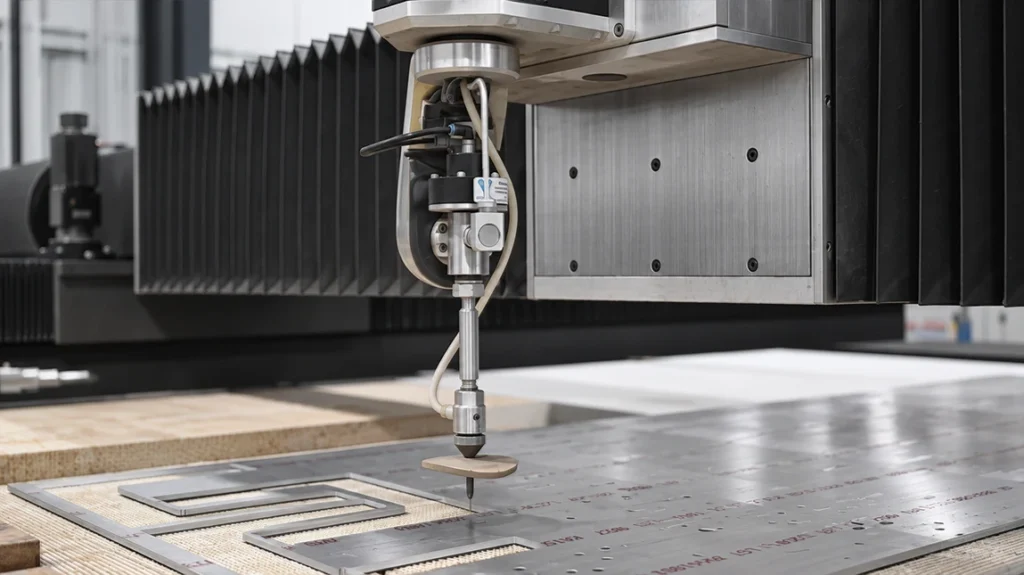
Quick Answer: Which Waterjet Cutting Head Should You Choose?
Choose the Flex 5-Axis head for complex 3D parts, extreme angles, and maximum flexibility. It tilts up to ±70° and rotates a full 360° without limit.
Choose the IGEMS Tilter for Taper Angle Compensation, standard bevels, and maximizing production speed. It tilts up to ±45° and uses automatic stand-off control to maintain the ideal nozzle-to-material distance.
Flex 5-Axis vs. IGEMS Tilter: Side-by-Side Comparison
Flex 5-Axis Head | IGEMS Tilter | |
Tilt range | Up to ±70° | Up to ±45° |
Built for | Capability | Efficiency |
Best for | Complex 3D parts, deep features, extreme angles | Standard bevels, Taper Angle Compensation |
Key strengths | Unlimited 360° rotation, direct-drive axes, no focal point, virtually any nozzle length | Automatic stand-off control, less movement for taper compensation, easier calibration |
Choose it when | You need maximum flexibility | You need maximum production speed |
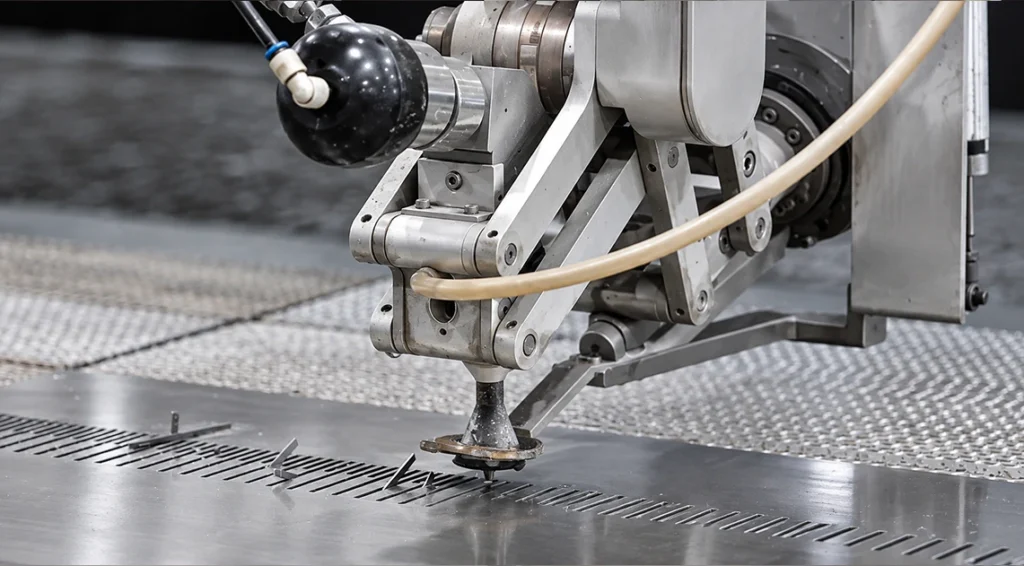
What Does a 5-Axis Waterjet Cutting Head Do?
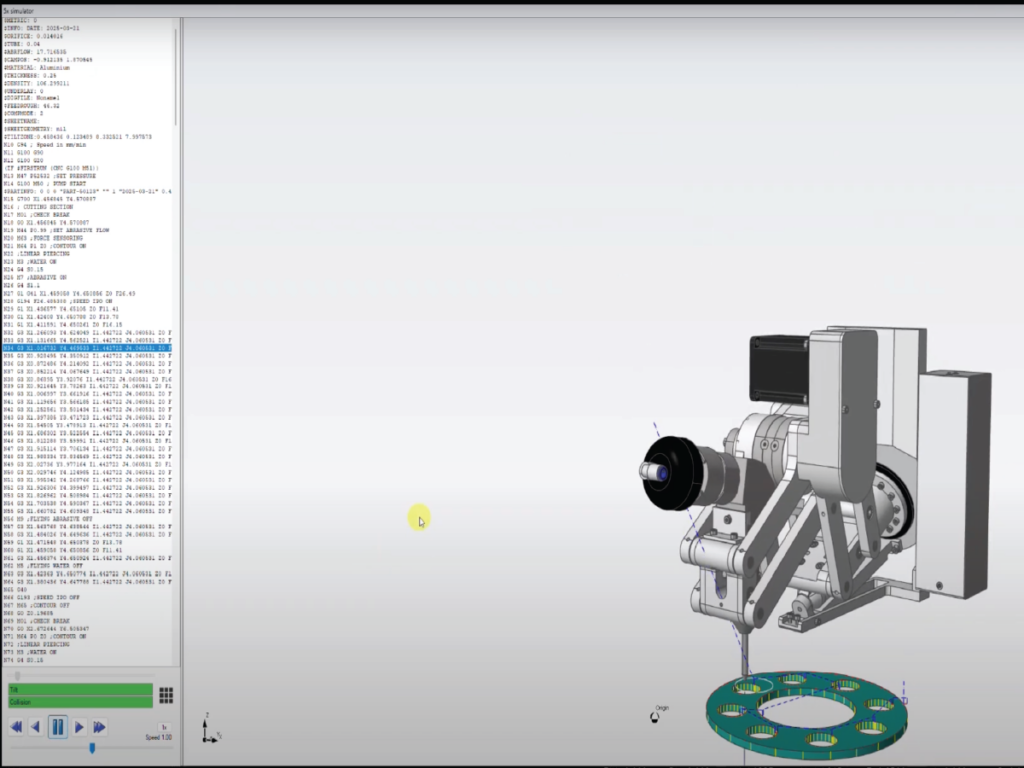
A standard waterjet head cuts straight down at 0°. A 5-axis head adds two rotating axes, so the stream can tilt and turn while the machine moves in X, Y, and Z. That lets you cut bevels, compensate for taper, and reach angles a flat 2D head cannot.
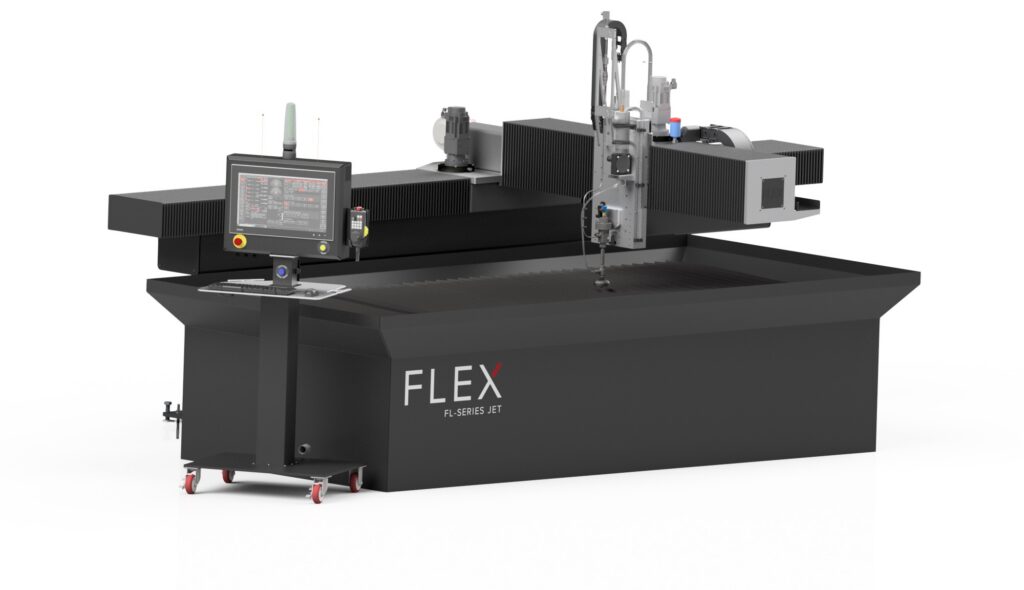
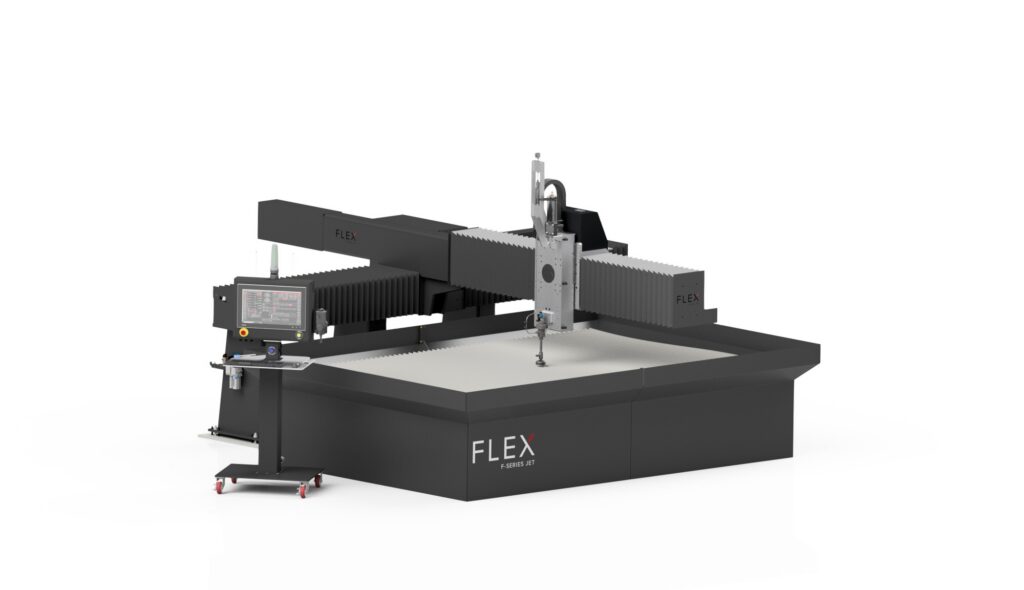
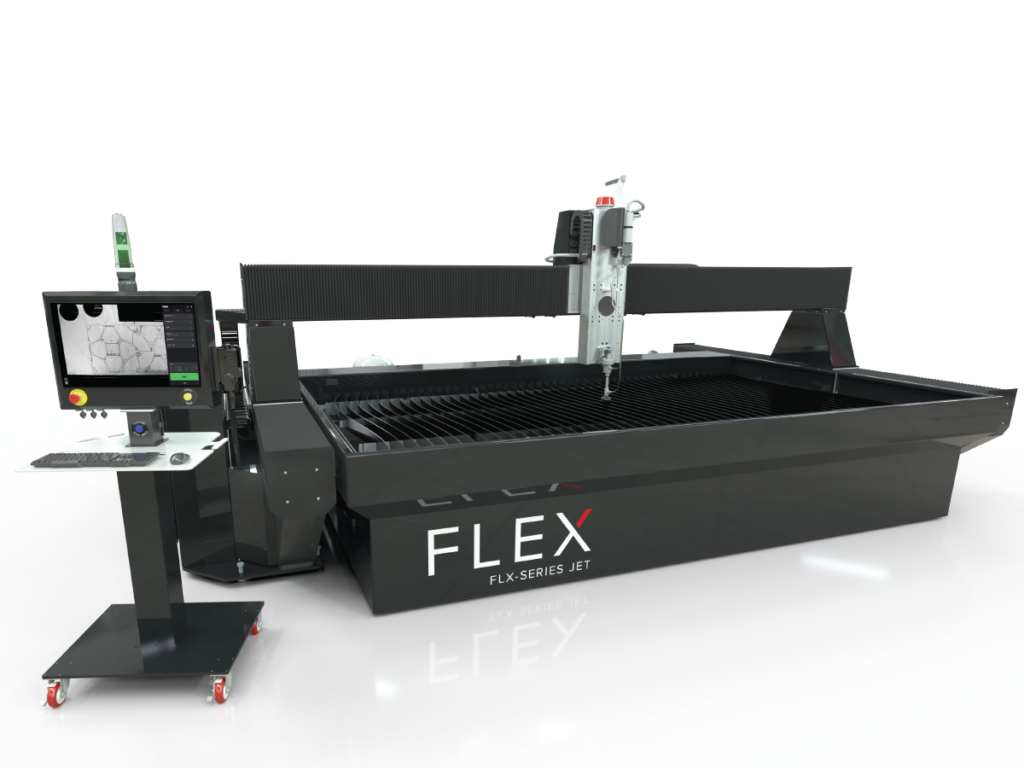
Flex offers three head options on the FlexJet: conventional, Tilter, and 5-Axis. The conventional head cuts 2D parts at 0°. The IGEMS Tilter and the Flex 5-Axis head cover angled and tapered work, and each one fits a different job.
What Is the Flex 5-Axis Cutting Head Best At?
The Flex 5-Axis head is built for complex geometry. Choose it when the part drives the decision.
Key specs:
- Direct-drive design
- Unlimited 360° rotation
- Up to ±70° tilt
- Accommodates virtually any nozzle length
Where it fits:
- Complex 3D parts. Unlimited rotation and a ±70° tilt let the head follow shapes a smaller tilt range cannot reach.
- Deep features. With no focal point, the head allows virtually any nozzle length, so you can match the nozzle to the depth of the feature.
- Extreme angles. Tilt up to ±70° gives you steeper cuts than a ±45° head allows.
When you need maximum flexibility, this is the head to evaluate.
What Is the IGEMS Tilter Best At?
The IGEMS Tilter is built for speed and precision. It focuses on the standard bevels and Taper Angle Compensation that fill most shop schedules.
Key specs:
- Up to ±45° tilt
- Automatic stand-off control that maintains the ideal nozzle-to-material distance
- Less movement needed to compensate for taper
- Easier calibration
Where it fits:
- Standard bevels. A ±45° range with consistent accuracy covers standard bevel work.
- High-volume cutting. Less movement for taper compensation means faster cutting, and easier calibration keeps the machine cutting instead of sitting in setup.
- Production speed. Automatic stand-off control holds the nozzle-to-material distance for you, which supports maximum throughput.
If your schedule is mostly standard bevels in volume, the IGEMS Tilter matches that job.
How to Choose Between the Flex 5-Axis and the IGEMS Tilter
Start with your parts, not the spec sheet. Ask these questions:
- What is the steepest angle you cut? If it stays at or under 45°, the IGEMS Tilter covers it. If you need up to 70°, you need the Flex 5-Axis head.
- Do your parts have deep features or complex 3D geometry? If yes, lean toward the Flex 5-Axis head and its nozzle length flexibility.
- Are you cutting standard bevels in volume? If yes, lean toward the IGEMS Tilter for its stand-off control, taper compensation, and calibration.
- Where does your setup time go? If calibration and taper correction eat your day, the IGEMS Tilter is designed to cut both.
If your work splits across both categories, talk to a Flex specialist about your part mix before you decide.
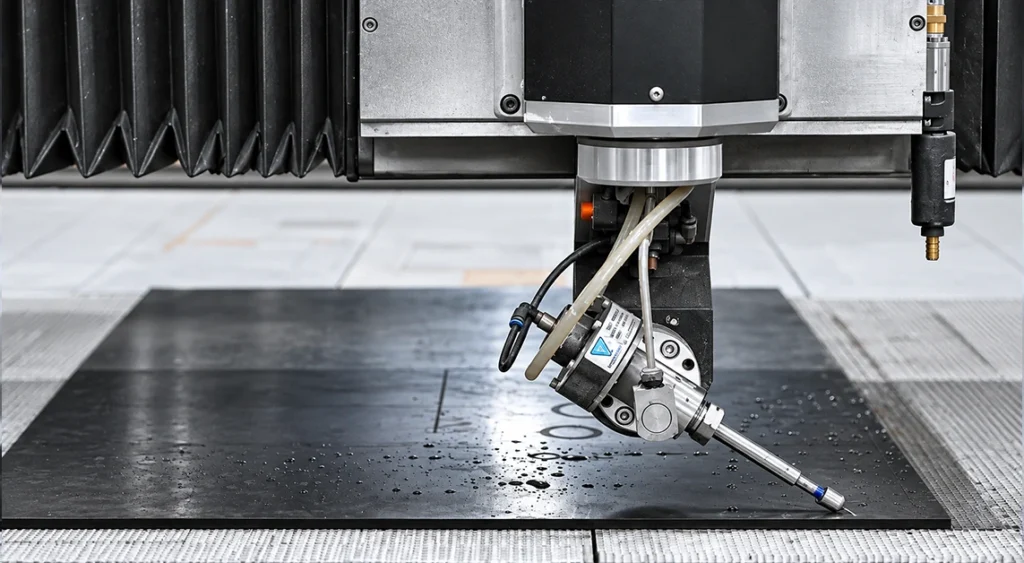
Flex 5-Axis vs. IGEMS Tilter: Frequently Asked Questions
What is the difference between the Flex 5-Axis head and the IGEMS Tilter?
The Flex 5-Axis head is built for complex geometry. It tilts up to ±70° with unlimited 360° rotation. The IGEMS Tilter is built for speed and precision. It tilts up to ±45° and uses automatic stand-off control. Flex describes the 5-Axis as built for capability and the Tilter as built for efficiency.
Which waterjet head has the larger tilt range?
The Flex 5-Axis head. It tilts up to ±70°, compared with up to ±45° for the IGEMS Tilter.
Which head is better for high-volume cutting?
The IGEMS Tilter. It needs less movement to compensate for taper, which means faster cutting and easier calibration.
Which head is better for deep features and extreme angles?
The Flex 5-Axis head. It has no focal point and allows virtually any nozzle length.
What is automatic stand-off control?
It is a feature of the IGEMS Tilter that maintains the ideal nozzle-to-material distance during cutting.
Can I get either head on a FlexJet waterjet?
Yes. FlexJet systems offer conventional, Tilter, and 5-Axis head options, and Flex can configure a system around your application.
Talk to Flex About Your Waterjet Application
Not sure which head fits your parts? Flex specialists can look at your part mix and recommend a configuration. Learn more about Flex waterjet cutting solutions at flexmachinetools.com/waterjet.
