
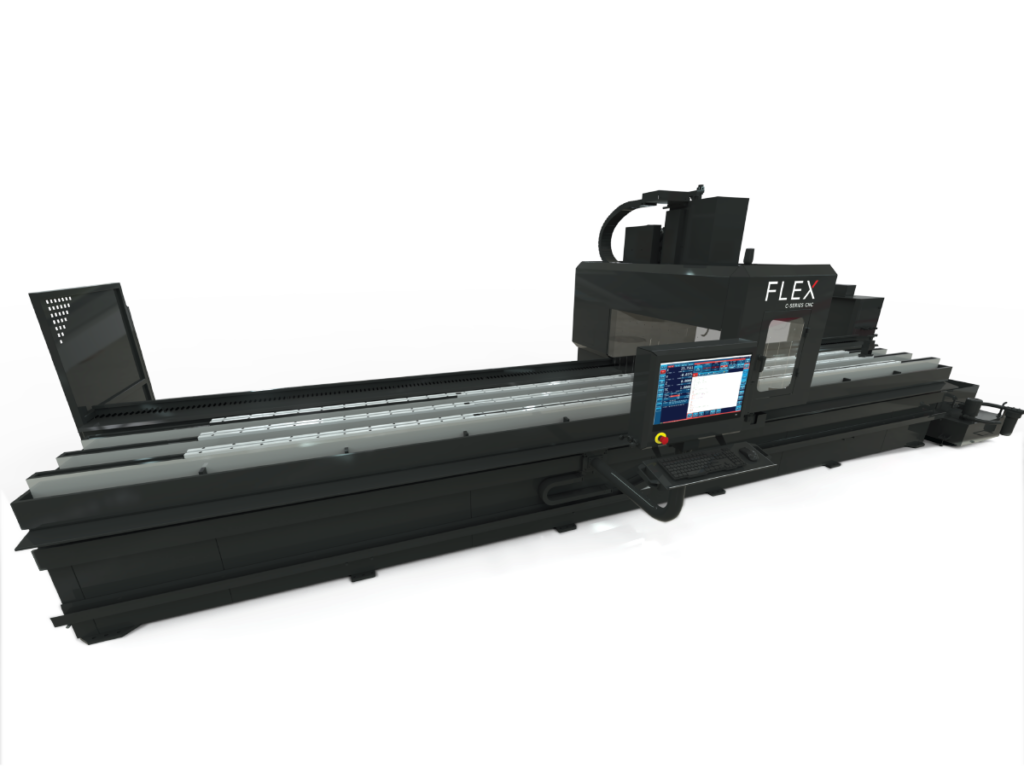
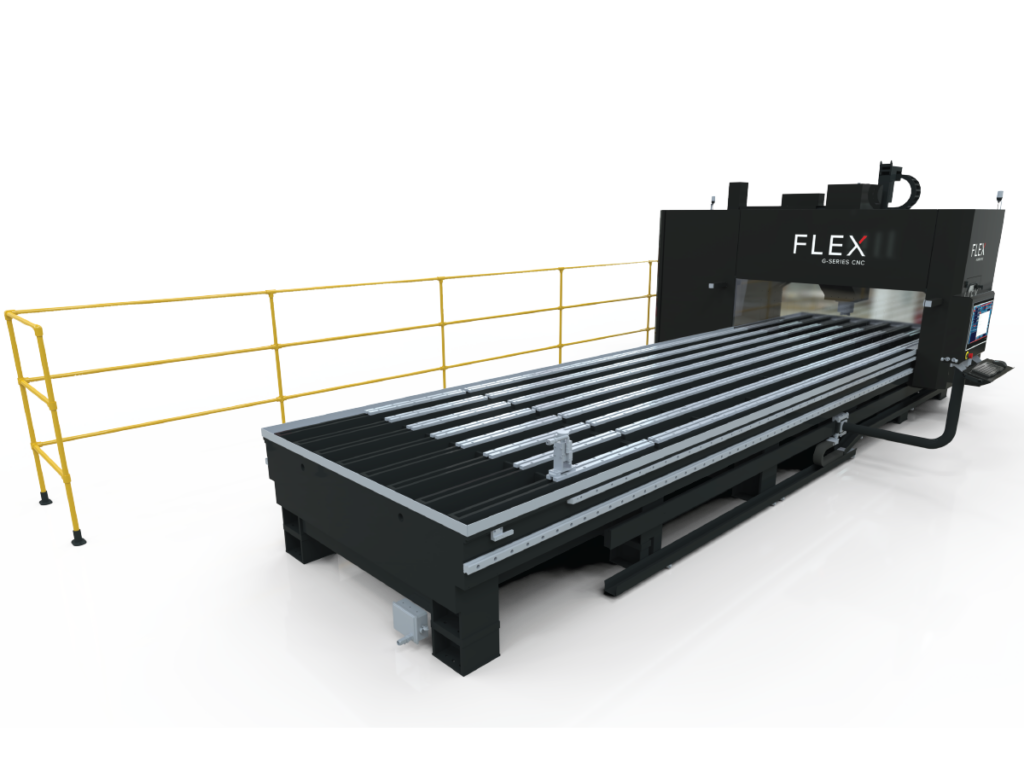
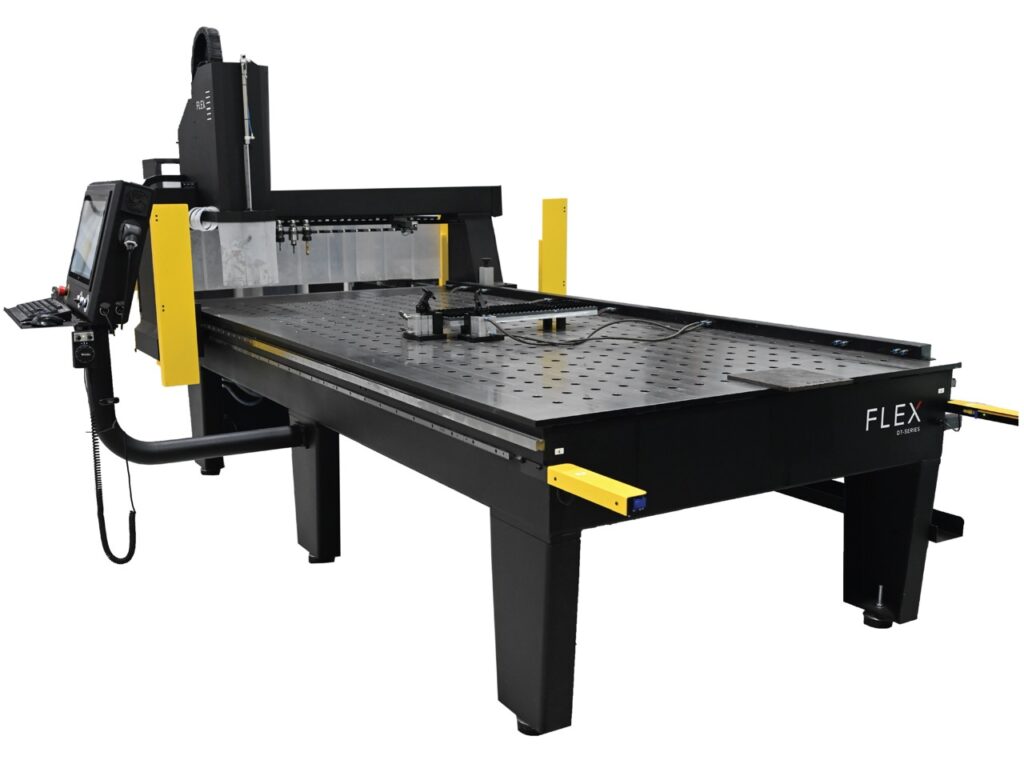
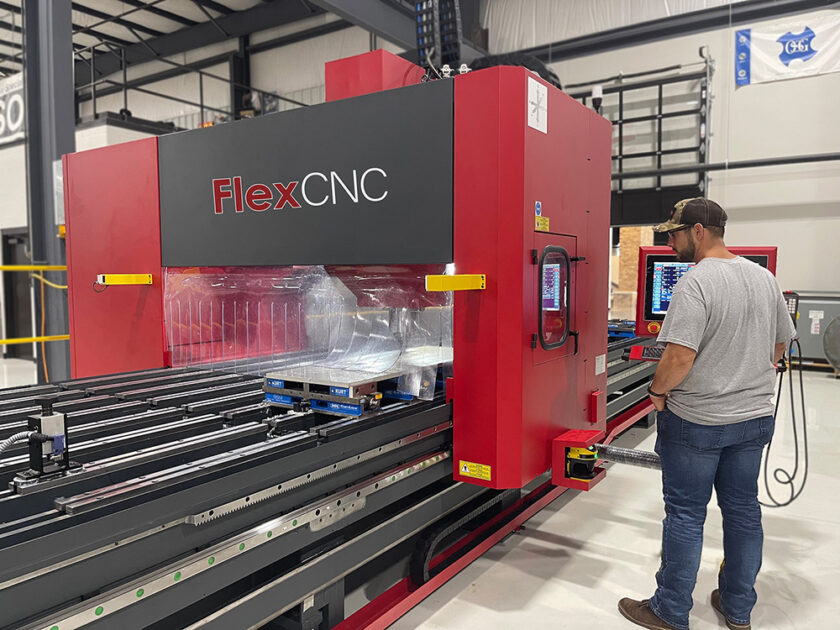


Repositioning a part mid-job takes time and introduces risk. The FlexCNC 4th Axis eliminates that step.
For shops machining multi-sided parts, this has traditionally meant needing multiple setups. Stop the job. Pull the part. Re-fixture it, and re-establish alignment. Start again. Every one of those steps adds time to the job and increases the chance for something to go wrong. The FlexCNC 4th Axis is built to remove that step entirely.
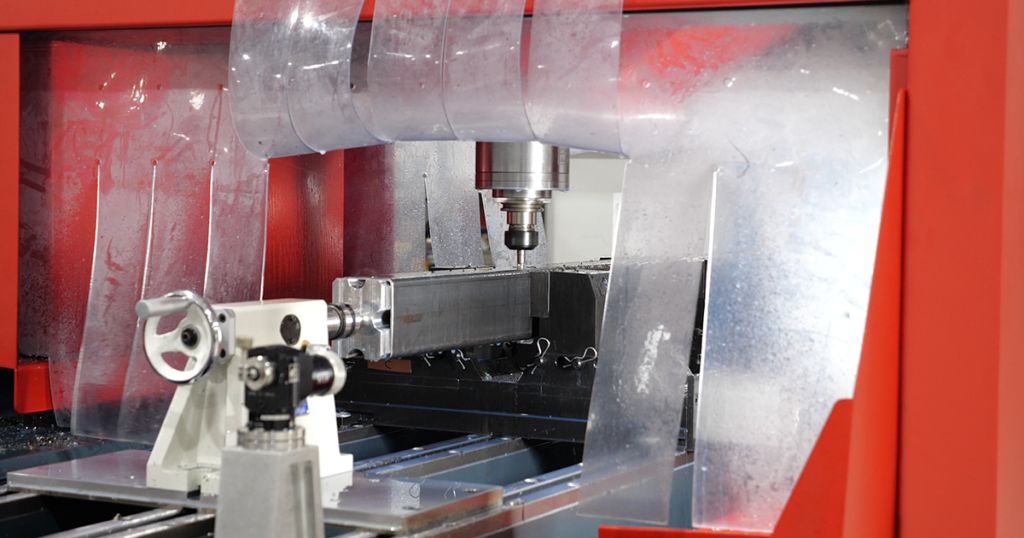
What the FlexCNC 4th Axis Does
The FlexCNC 4th Axis is an optional rotary axis that adds rotational movement to the machining process. Instead of removing a part to access a different face, the 4th axis rotates the part in place, allowing multiple faces to be machined in a single setup.
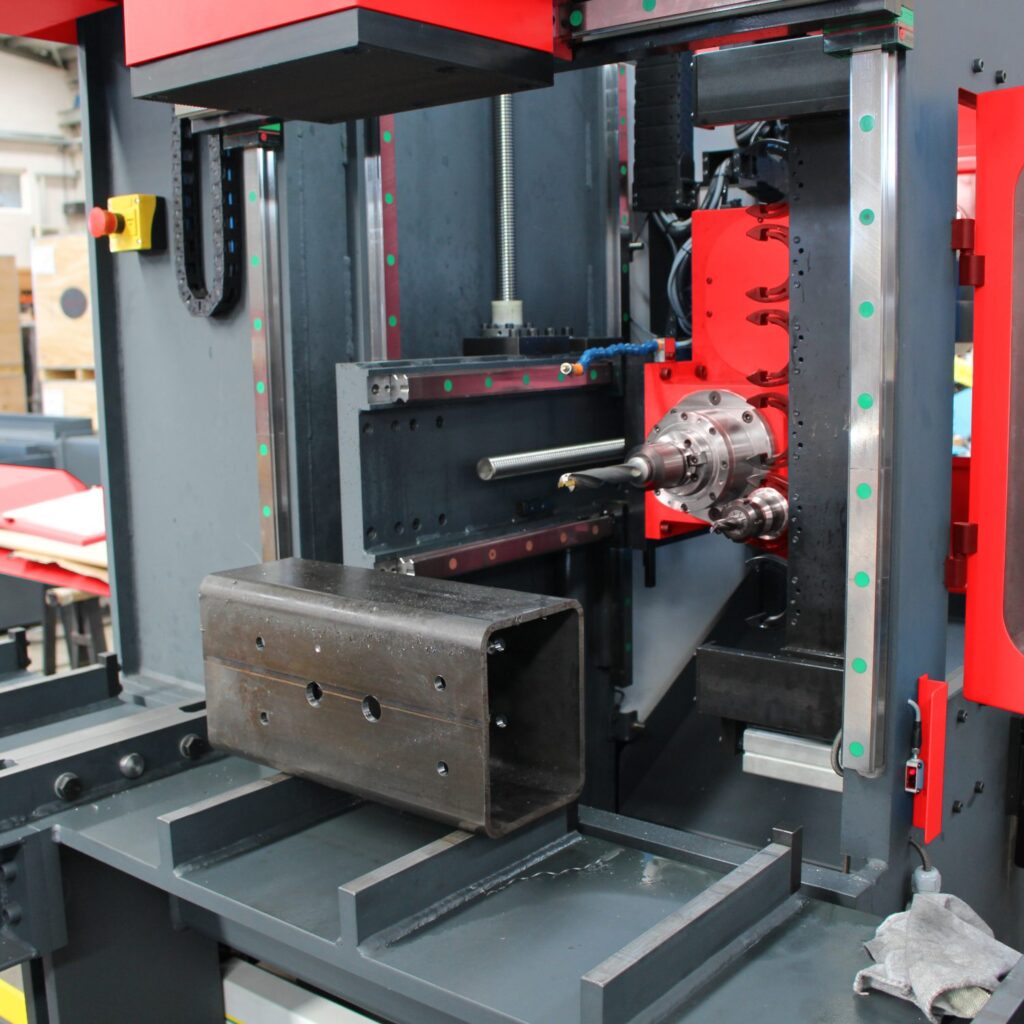
This matters most on parts that are inherently multi-sided, including:
- Round stock
- Square tube
- Pipe
- Extrusions
These part types typically require machining on more than one face. Without a 4th axis, that means stopping the program, pulling the part out of the fixture, re-fixturing it, and re-establishing alignment before work can continue. Each of those steps takes operator time and introduces the risk of a positional error, especially on longer parts, where repositioning is more difficult to do accurately.
Why Keeping the Part Fixtured Matters
The core advantage of the FlexCNC 4th Axis is simple: the part never leaves its fixture. It stays securely clamped and rotates as needed throughout the program.
That has three direct effects on a shop floor:
Reduced handling time. No stopping the job to physically move or reposition the part. The machine handles the rotation, so the operator isn’t tied up re-fixturing between operations.
Improved positional accuracy. Once a part is aligned and fixtured, that alignment holds for the entire job. There’s no re-establishing zero points or fighting drift from a second or third fixturing.
Fewer alignment issues on long or complex parts. The longer or more complex the part, the harder it is to get a repositioned setup back to the same accuracy as the original. Keeping the part fixtured removes that variable altogether.
Built for Multi-Sided Production
The FlexCNC 4th Axis is a fit for manufacturers running tubular, extruded, or multi-sided components where setup efficiency, repeatability, and throughput are priorities. If your shop is already dealing with the downtime that comes from multiple setups, this is the kind of accessory that can deliver a fast return by reducing setup time and eliminating errors caused by re-fixturing.
Scales With the FlexCNC
Long-Bed Platform
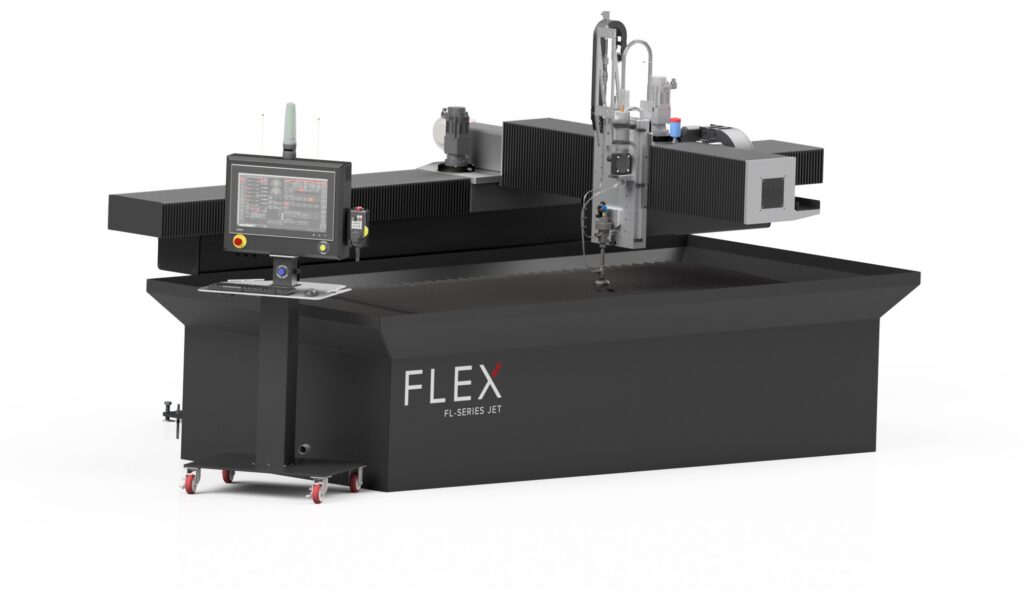
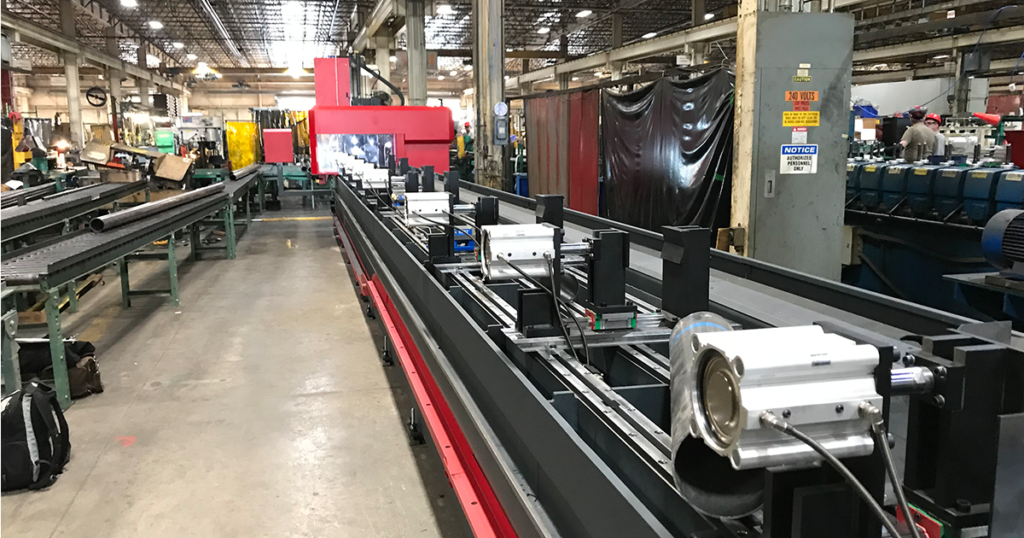
Because the FlexCNC is built on a long-bed platform, it’s not limited to a single 4th axis unit. Multiple 4th Axis units can be configured on the same machine. That opens up two production strategies:
- Run identical parts simultaneously across multiple 4th axis stations for higher throughput on a single part number.
- Run different parts within the same machining cycle, using separate 4th axis units to handle different jobs without needing separate machines.
For shops looking to scale output without adding floor space or additional machines, this configuration flexibility is a significant advantage.
The Bottom Line
Multi-sided parts don’t have to mean multiple setups. The FlexCNC 4th Axis keeps parts fixtured, rotates them as the program requires, and removes the handling time and alignment risk that come with traditional re-fixturing. For manufacturers running multi-sided parts, it’s a straightforward way to improve repeatability and throughput on every job that crosses the machine.
Watch the FlexCNC 4th Axis in action in the video above to see how it handles round stock, square tube, and extrusions without a single manual repositioning step.
Ready to Add a 4th Axis to
Your FlexCNC?
If your shop is losing time to re-fixturing on round stock, tube, pipe, or extrusions, it’s worth finding out what a 4th axis could do for your throughput. Contact Flex Machine Tools today to talk with our team about adding the 4th Axis to your FlexCNC, or to spec out a new machine built with it from the start.
