

This article originally appeared in TECHGEN Media and was written by Jimmy Myers.
Meeting the demand for machining centers built for larger workpieces
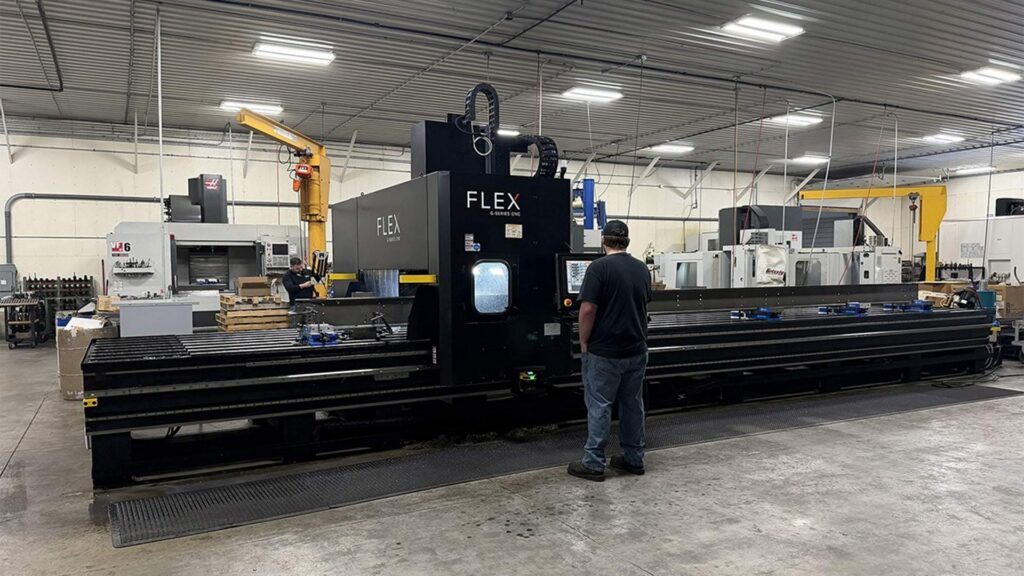
Fabricators have historically concentrated on cutting, forming and welding components. Similarly, steel service centers have focused on supplying material that is cut to length, beveled or otherwise prepared to customer requirements. For both, machining operations have often been outsourced or passed downstream in the supply chain.
However, as customers demand tighter tolerances, faster turnaround and more control over production, more service centers and fabricators are adding machining capabilities that used to be outside their core business.
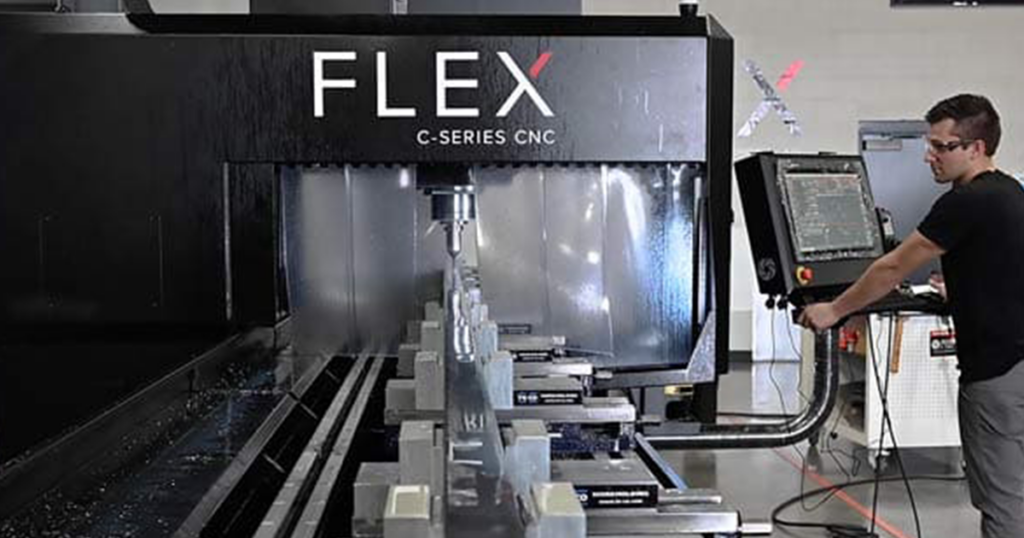
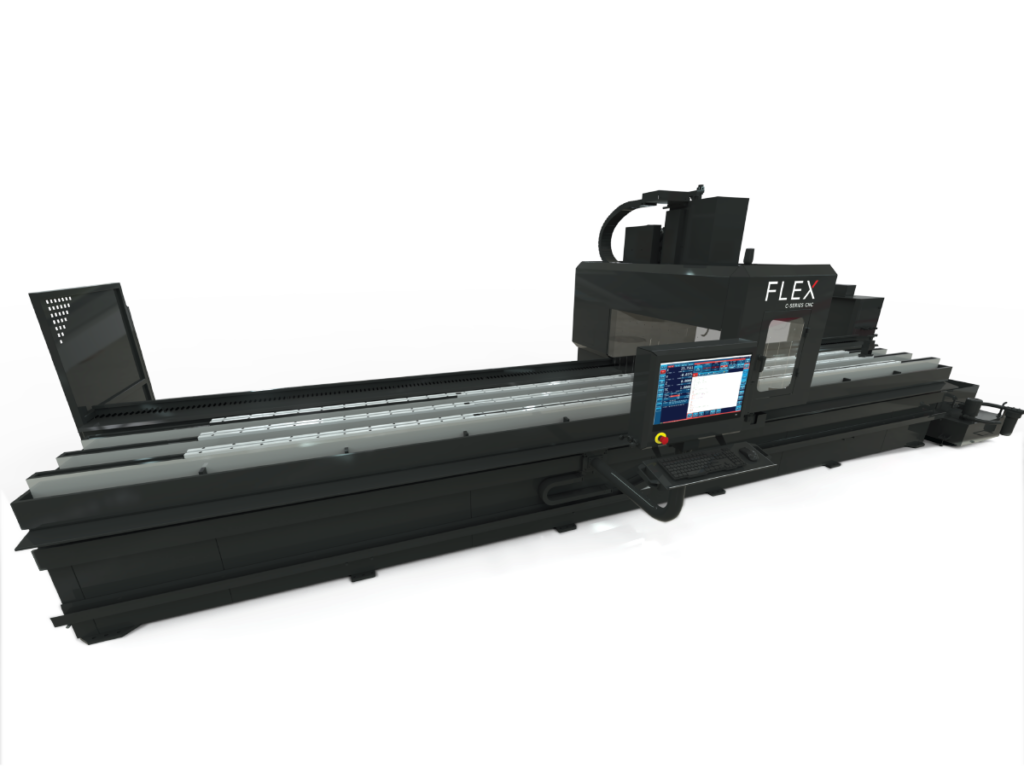
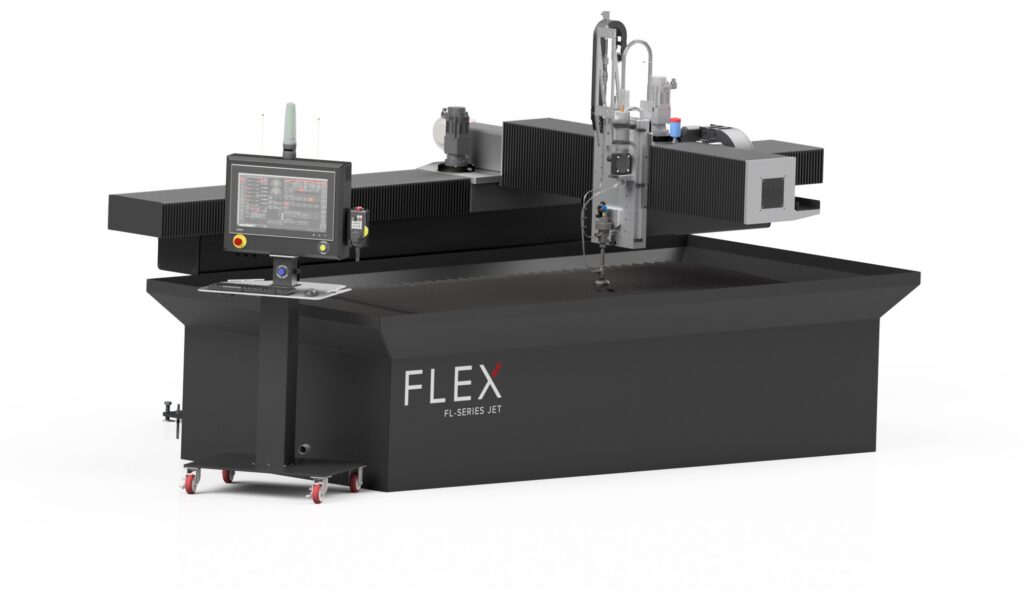
Flex Machine Tools’ C-Series and G-series CNC milling machines are easy to use, and Flex offers training that can get a novice running parts in as little as a few days.
The trend accelerated on the back end of the Covid-19 pandemic as businesses faced material shortages and increased backlogs. Logan Skelly, national sales manager at Flex Machine Tools, says backlogs went from days to weeks to months in some cases and there was no reliability.
“We consistently heard that customers wanted more control over their lead times and supply chains rather than relying on outside sources,” he says.
While the supply chain complexities related to that era are mostly resolved, economic and labor constraints continue to shape how shops invest in new equipment. For smaller job shops, the cost and scale of large-format machining centers can be difficult to justify, particularly when paired with ongoing labor challenges. As a result, larger fabricators and service centers are increasingly adding machining capabilities to support this work, allowing them to capture additional value while filling a gap in the market.
Meeting the Middle
Flex Machine Tools, headquartered in Wapakoneta, Ohio, has built a product line around the needs of many manufacturers. There is a meaningful gap between the compact vertical machining centers common in job shops and the massive bridge mills and gantry machines that require significant capital investment and specialized infrastructure. For many fabricators and service centers, neither option is an ideal fit.
For these companies, most large machines are not in the budget, yet smaller machining centers are not capable of processing oversized parts.
“There’s a gap between smaller machining centers and the large, high-cost systems,” Skelly says. “They’re looking at our machine as a solution to give them those capabilities.”
Flex’s solution is the Flex C-Series and G-Series CNC milling machines. For many, this represents a first step into machining.
“In a lot of cases, it’s their first CNC milling machine,” Skelly says. “They recognize the need to bring some of that capability in-house to stay competitive, but they also want something that’s approachable from an investment and operational standpoint.”
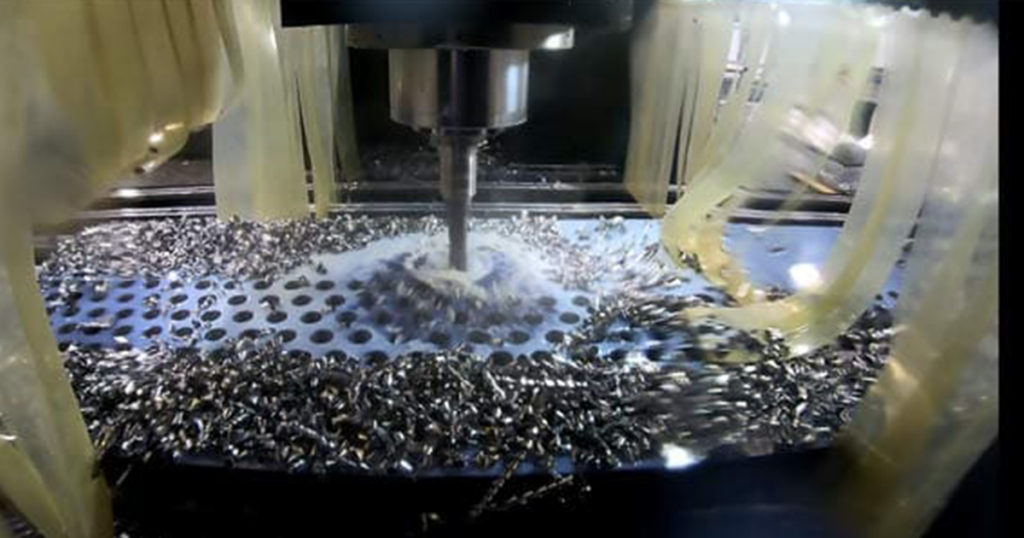
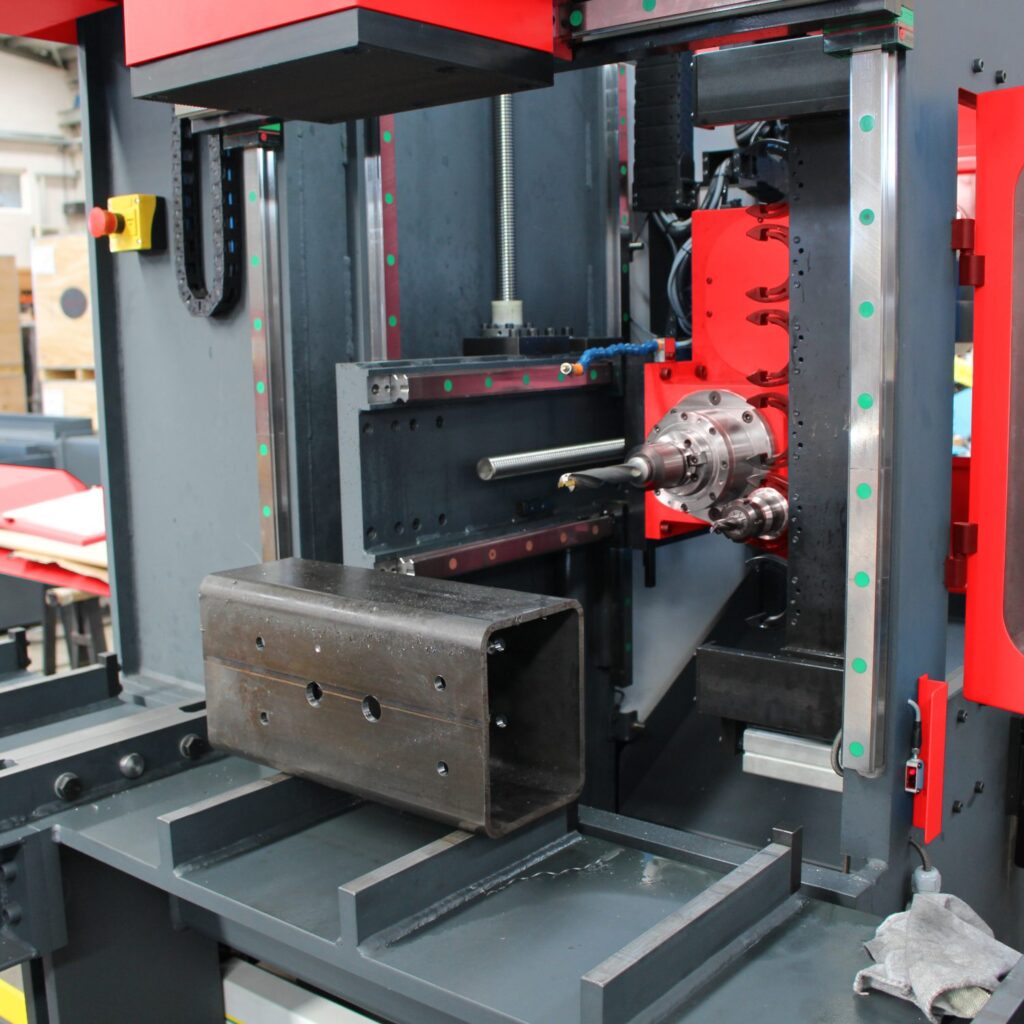
Thermal cutting leads to warping, but with machine tooling technology, clean finishes are the result, leading to less secondary work.
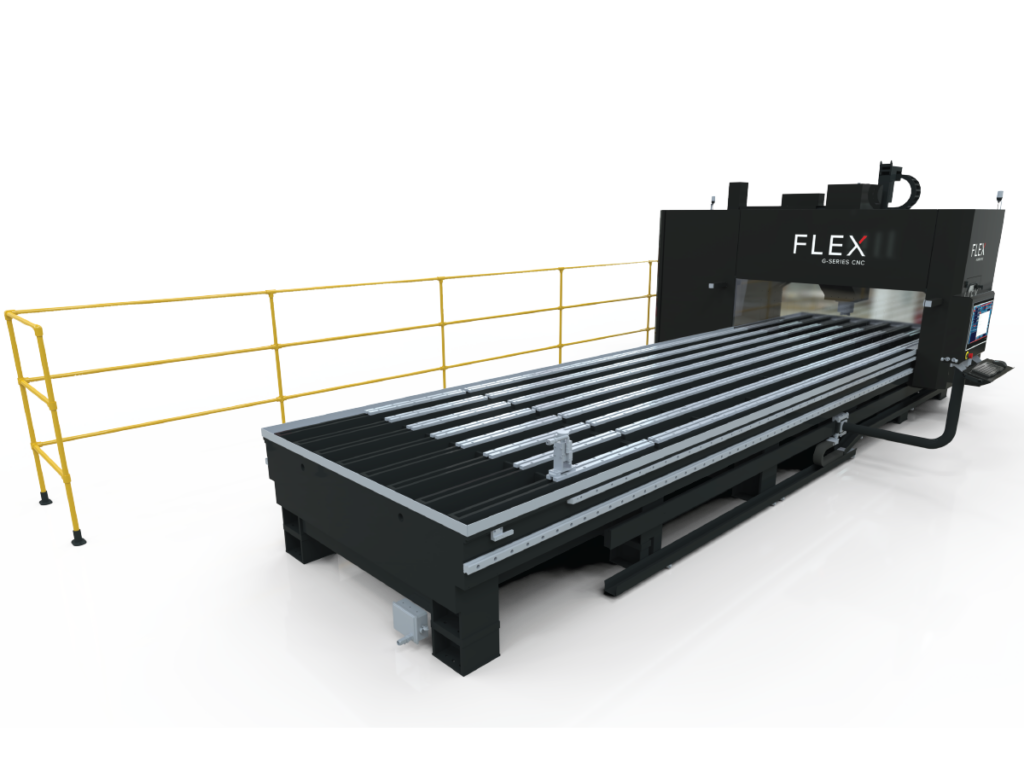
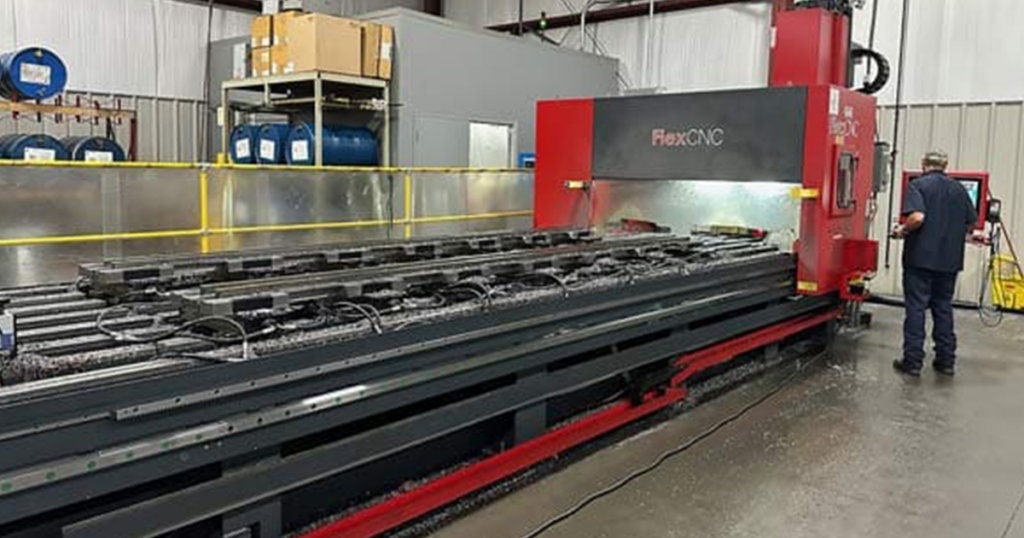
The C-Series is a cantilever-style platform uniquely designed for flexibility and general-purpose machining of long parts, while the G-Series uses a gantry design suited for larger work envelopes and heavier cutting applications.
Both platforms are available in configurations ranging from 10 ft. to 80 ft. of X-axis travel. The C-Series offers 24 in. of Y-axis travel and 17.5 in. of Z-axis travel, while the G-Series provides expanded Y-axis options from 4 ft. to 10 ft. and up to 34 in. of Z-axis clearance.
“The majority of the machines we sell fall in the 20-ft. to 40-ft. range,” Skelly says. “There are dozens of options below 10 ft. or 15 ft., but once you require something larger, the number of practical solutions becomes much more limited.”
For shops machining weldments, large plates or long structural components, that size range can help reduce or eliminate the need for repositioning parts between operations.
“If you’re working with larger parts and trying to avoid the inherent issues that come with repositioning on a smaller machine,” Skelly says, “this type of platform provides a way to handle it in a single setup.”
Service Center Advantages
For steel service centers, the case for adding machining capability is increasingly tied to customer demand and competitive positioning. Many customers are specifying tighter tolerances and improved surface finishes, which are requirements that thermal cutting processes such as plasma, oxyfuel and laser cutting may not consistently meet on their own.
“As tolerance and finish requirements increase, drilling and milling become more important,” Skelly says. “Service centers that can offer those capabilities are in a position to capture more of that work.”
Adding these processes also allows service centers to take on more value-added work, reducing the need for customers to find additional vendors for secondary operations.
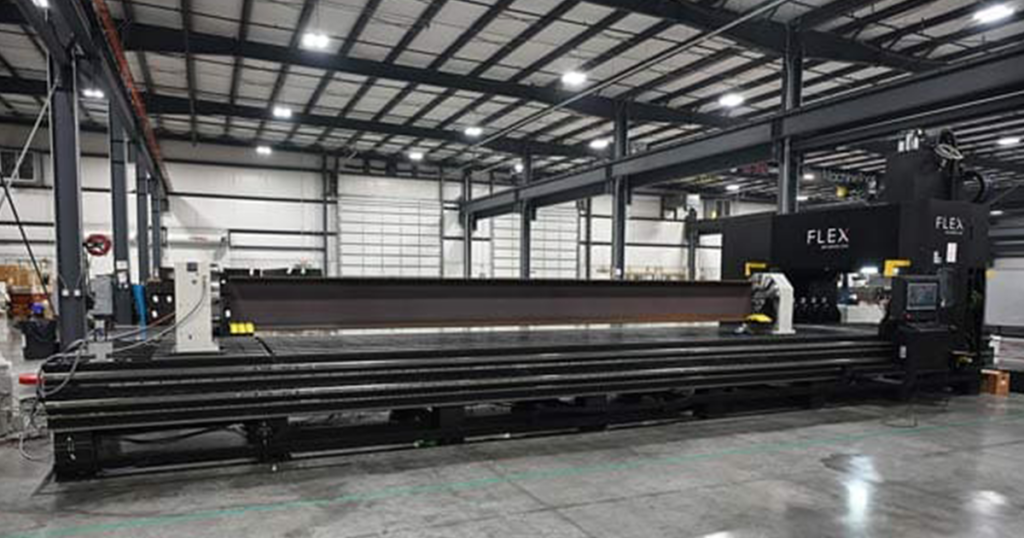
A long holding table allows users more options in processing longer, larger workpieces.
“If a service center can provide cutting and machining services,” Skelly says, “a lot of customers will take advantage of that. Many don’t have the equipment to efficiently process large parts themselves and prefer to work with a single source.”
While service centers have traditionally avoided competing directly with their customers, that dynamic is evolving. In many cases, machining capabilities are being applied to larger workpieces that fall outside the typical scope of smaller job shops.
“In a service center environment, the machines are typically used to process larger plates and structural material,” Skelly says. “That’s where service centers can add value without necessarily overlapping with the type of work many smaller shops are targeting.”
As a result, the distinction between service centers and fabrication or machining shops continues to blur, driven by a shared need to improve efficiency, reduce lead times and offer more complete solutions to customers.
Tooling Basics
Flex C-Series and G-Series milling machines are built around widely used tooling standards. With CT40 and CT50 spindle options, they accept some of the most common tool holders in the industry, allowing customers to leverage existing inventory or source from any major supplier.
Depending on configuration, the machines can hold up to 24 tools. That capacity aligns with the requirements of most fabrication and service center applications, where part complexity typically does not demand large tool libraries.
Tooling selection is often application-specific, particularly when working across a range of materials and optimizing production time. Rather than leaving customers to figure it out on their own, Flex offers application support to help dial in the right tools, speeds and strategies.
“There are definitely a lot of options when it comes to tooling,” Skelly adds. “That’s why we have people on our team to help. We also partner with tooling manufacturers that we can connect with our customers for additional support.”
Ease of Access
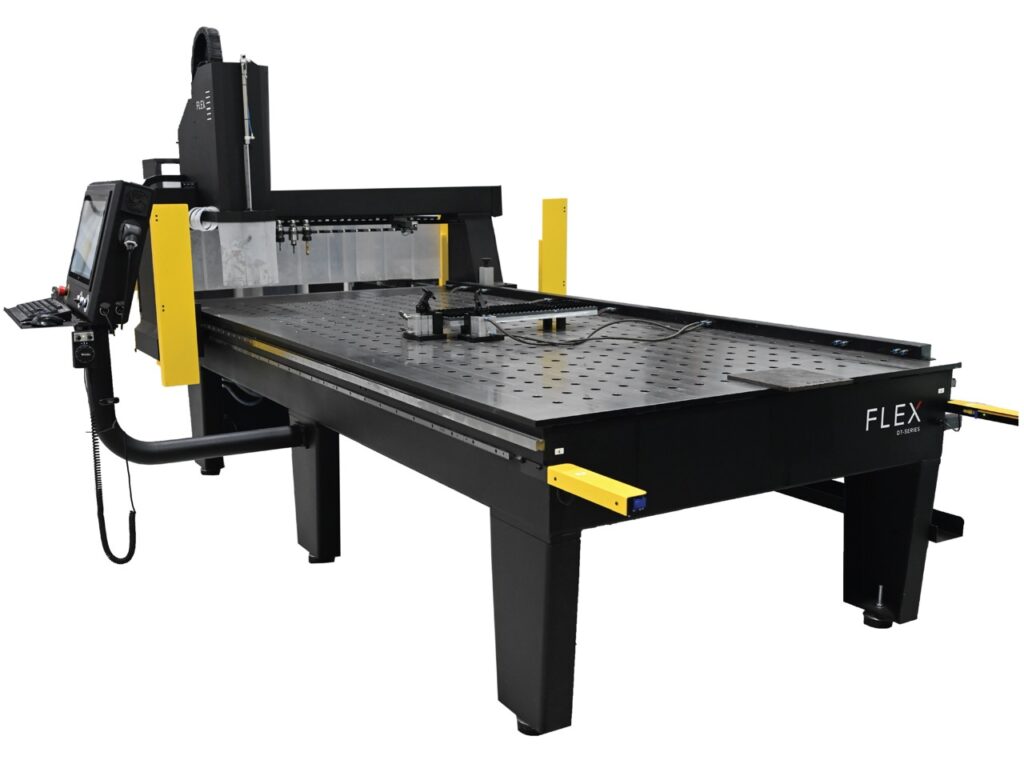
For shops used to enclosed machining centers, the open bed design of the C-Series and G- Series machines offers a more practical and efficient approach. Material can be loaded anywhere along the table using a forklift or overhead crane, eliminating the size constraints and access limitations of traditional enclosures. This can be advantageous when handling large plates, structural components or long parts.
This design also improves overall workflow. While the machine is cutting in one area, operators can unload finished parts or set up the next job in another section of the table. That ability to work in parallel significantly reduces downtime and keeps the spindle cutting longer.
“One of the biggest constraints with traditional machining centers is the time spent unloading and reloading parts,” Skelly says. “If the machine has to stop every time you change over, that adds up quickly and is often more time consuming than running the parts themselves. Being able to keep the machine running can improve throughput quite a bit.”
Safety is built into the system through a laser area scanner that moves with the gantry, automatically detecting operator presence within a specific distance and preventing unsafe access during operation.
The large bed also supports higher throughput by allowing multiple parts to be loaded and processed in a single cycle. With the proper setup, the machine can run unattended for extended periods of time.
Software and Controls
Flex pairs its mechanical platform with a modern control system designed to be capable and easy to use. Features like advanced look-ahead ensure smooth, efficient motion, while probing cycles support accurate part setup and repeatability.
The control interface is built around a large touchscreen with a straightforward layout, making day-to-day operation intuitive for new and experienced users alike.
“We’ve developed a control that is simple to use and capable of everything expected of a modern-day CNC milling machine,” Skelly says. “And it does them well – things like high-speed toolpaths and probing cycles that shops are familiar with using.”
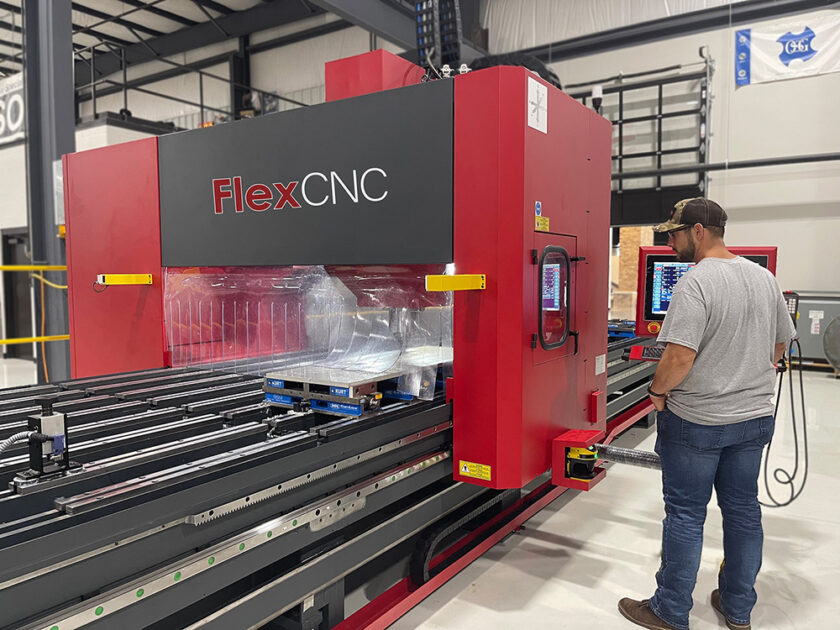
A Flex customer uses automated clamping to improve efficiency when machining multiple long parts in a single setup.
Like any CNC platform, part programming is often handled through widely used CAM software such as Mastercam, GibbsCAM or Autodesk Fusion. These platforms continue to become more user-friendly, with increasing levels of automation in toolpath generation and tooling selection.
“The programming side has traditionally been one of the bigger barriers,” Skelly says. “But CAM software is becoming easier to use, along with more training resources available. We’re also starting to see and experiment with auto-generated programs with the help of AI.”
For customers new to machining, this is an area where support makes a difference. Flex works with customers to simplify the programming process and reduce the learning curve, helping them get parts into production quickly and confidently.
Running Parts
Implementation support is a key consideration for fabricators and service centers adopting machining for the first time. Flex includes training as part of the installation process, with sessions conducted at its Ohio facility covering operation and maintenance, along with optional on-site training. Additional training at Flex’s facility is available to customers at no cost for as long as they own the machine.
Ongoing support includes remote diagnostics and on-site technician service. The company also offers application support through its FlexCare program, which includes assistance with programming, tooling selection and workholding.
“We’re only as successful as our customers,” Skelly says. “Our goal is to make sure they’re comfortable running parts and getting value out of their machines as quickly and consistently as possible.”
