


Automated Robotic Tapping Cell Case Study:
Optimizing Workforce with Flex Automation
Manufacturers today are under constant pressure to do more with less. Less labor, less downtime, and less variability in their processes. Automation, particularly robotic tapping cells, has become a proven way to improve efficiency while maintaining flexibility on the shop floor. One recent project led by the Flex engineering team is a perfect example of how thoughtful automation can help manufacturers optimize their workforce while improving consistency, safety, and throughput.
In this custom application, Flex designed and delivered a fully integrated automated tapping cell that combined a FlexArm RNR pneumatic tapping arm, a Fanuc CR-35iB collaborative robot, and an electromagnetic end-of-arm tool (EOAT) capable of handling steel parts up to 50 lbs. The result was a flexible, turnkey solution tailored to the customer’s wide range of parts and production needs.
Customer Objective:
Workforce Optimization Through Robotic Automation
The customer’s primary objective was clear: optimize workforce utilization. Their tapping operation previously required a dedicated operator to manually run a tapping arm throughout the shift. While effective, this approach tied up skilled labor that could be better utilized elsewhere in the facility.
By automating the tapping process, the customer wanted to:
- Free up operators for higher-value tasks
- Maintain flexibility for a large variety of part sizes
- Improve process consistency and quality
- Ensure operator safety when interacting with the system

Previous Process: Manual Pneumatic Tapping Arms
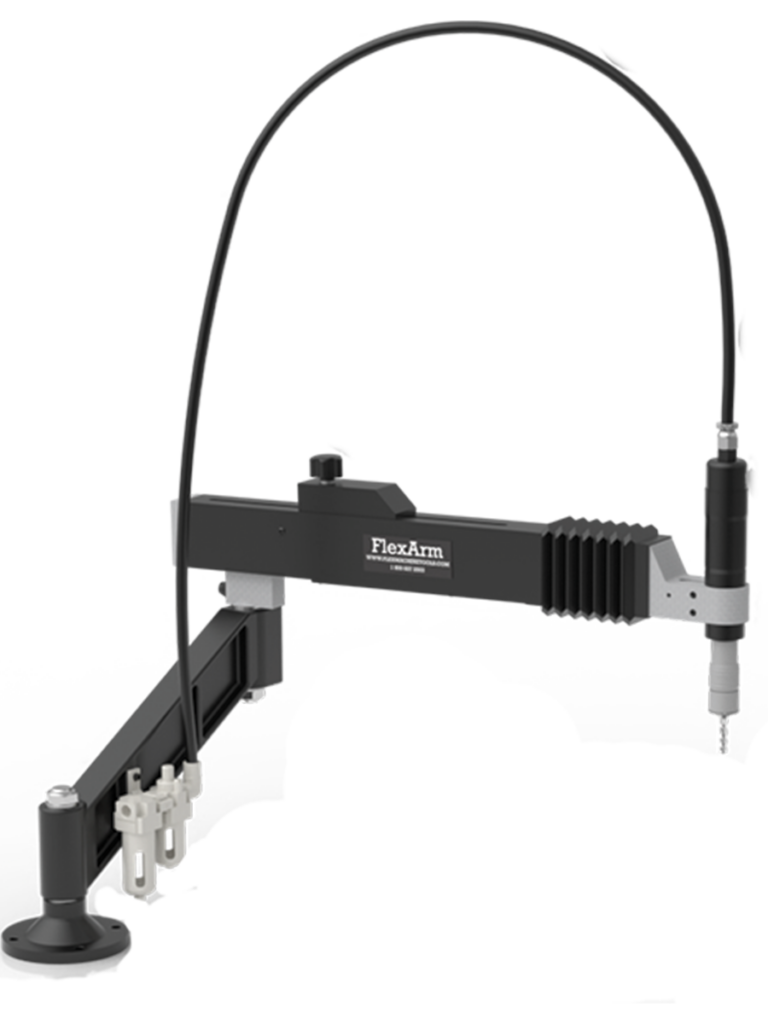
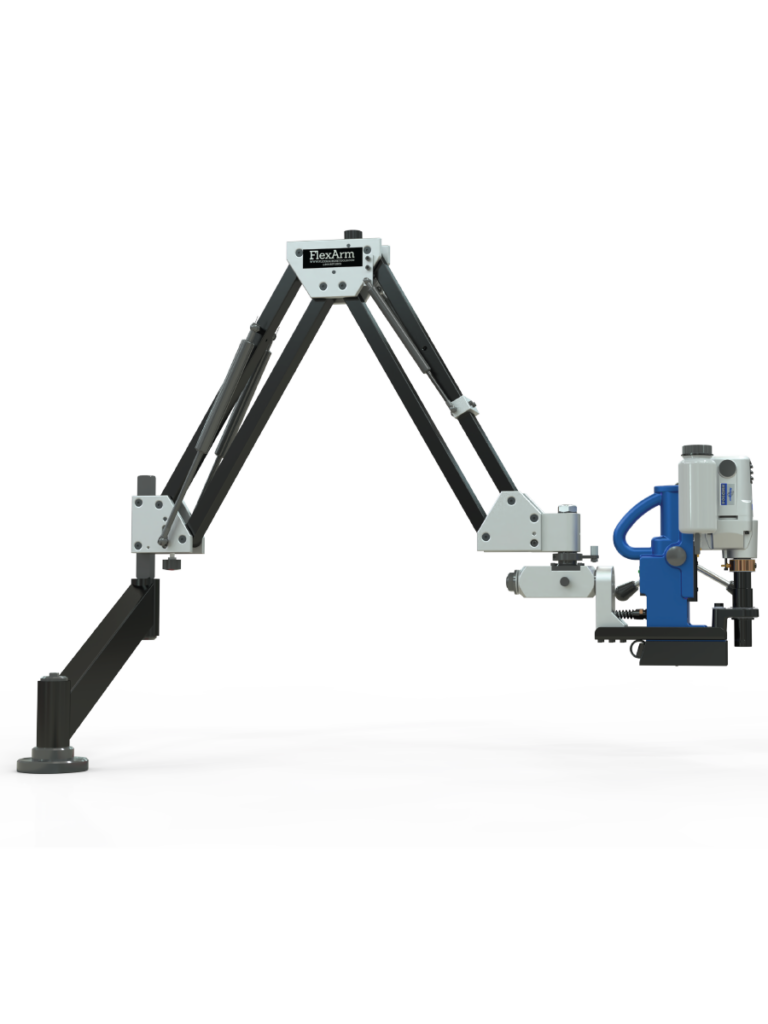
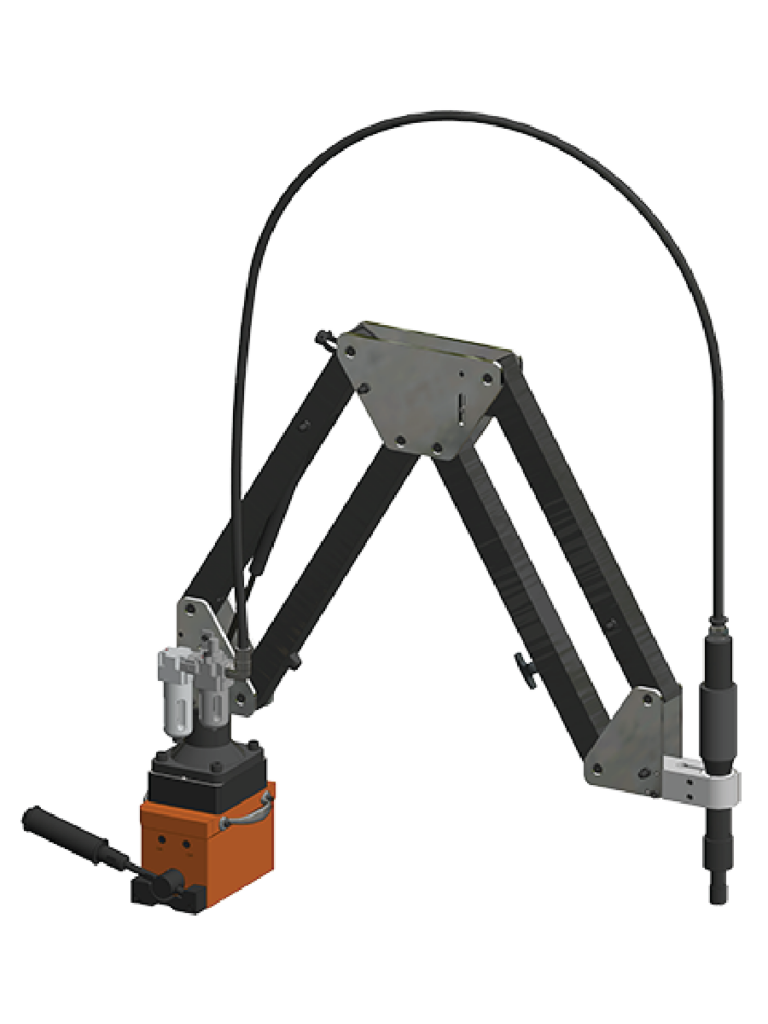
Before working with Flex, the customer was manually tapping parts using pneumatic tapping arms—a proven, reliable solution that many shops continue to use successfully every day. Tapping arms remain an excellent choice for applications that require flexibility, operator control, and a lower barrier to entry for threading operations.
In this case, however, the customer’s production volume and workforce goals created an opportunity to build upon that foundation with automation. As throughput requirements increased, the customer wanted to reduce the amount of hands-on time required per part while maintaining the same tapping quality they had achieved with manual tapping arms.
The Flex Solution: Turnkey Automated Robotic Tapping Cell
Flex provided a fully automated tapping cell designed to handle a wide range of part sizes. From approximately 3″ x 3″ up to 3′ x 3′, all within a single system. The solution was engineered as a turnkey package, allowing the customer to integrate it seamlessly into their production environment.
Key Components of the Robotic Tapping System
At the core of the cell is a carefully selected combination of automation and tooling:
- Fanuc CR-35iB Collaborative Robot
A network-compatible collaborative robot with a 77 lb payload capacity, enabling safe human interaction while maintaining the strength needed for handling large steel parts. - Electromagnetic EOAT
Designed to pick and place steel components weighing up to 50 lbs, providing reliable and repeatable material handling across a wide range of part geometries. - FlexArm RNR-20 Pneumatic Tapping Arm
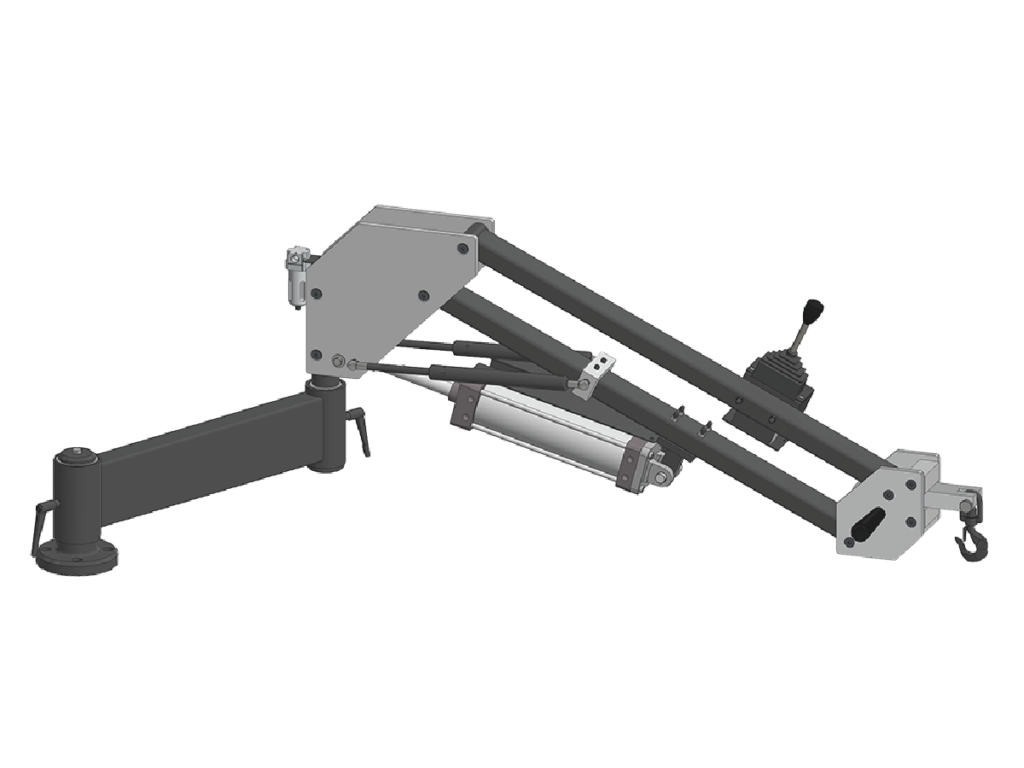
Integrated with the robot using Flex’s robotic integration package, offering up to 7/8” tap capacity with a 100/400 RPM motor for consistent, high-quality tapping. - Fabricated Work Table
Custom-built to support the robot, tapping arm, Blanchard ground tapping surface, part jigs, and part holders, all designed for stability, accuracy, and long-term durability. - Material Flow Infrastructure
Four heavy-duty carts were included for infeed and outfeed, allowing operators to focus on loading and unloading parts rather than running the tapping process.
Flexible Automation for a Wide Range of Part Sizes
One of the biggest challenges in this project was accommodating the wide variety of parts the customer needed to run. Flex addressed this by designing:
- A clamp mechanism similar to the customer’s existing tapping fixture
- Two interchangeable part locating jigs
- Robot programming for two initial parts, with pre-setup for up to 60 part programs
This approach ensured that new parts could be added quickly and efficiently without lengthy reprogramming or downtime.
Collaborative Robot Safety and Operator Protection
Operator safety was a critical consideration throughout the design process. The Flex engineering team implemented multiple layers of protection, including:
- Three area scanners are programmed to stop motion and dump the air supply when breached
- A collaborative robot designed for safe human interaction
- Fencing across the back and sides of the cell to clearly define safe zones
These features enable operators to safely load and unload carts while the system is in operation, without compromising productivity.
Simplified Operation with Custom HMI and Training
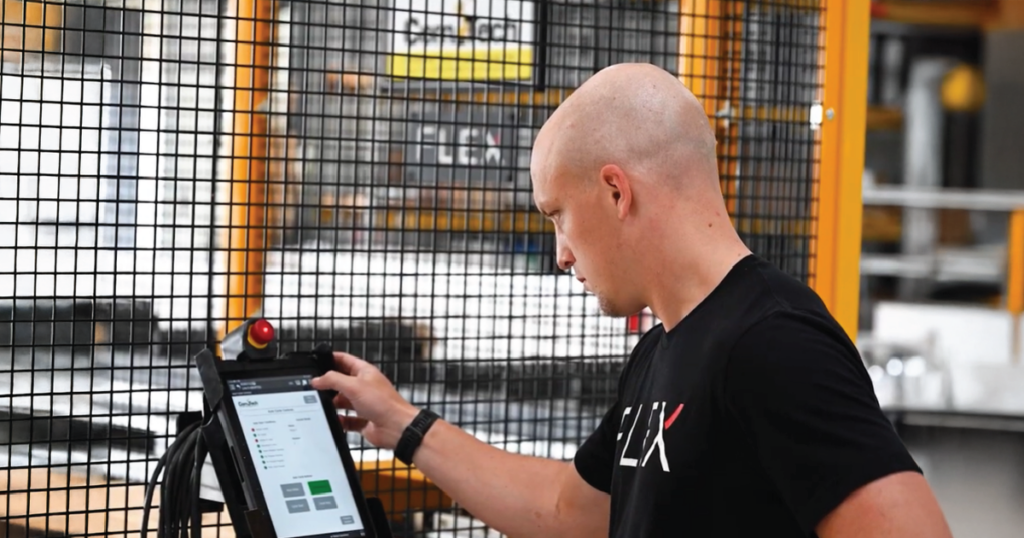
To make day-to-day operation as simple as possible, Flex programmed custom HMI screens directly on the Fanuc robot teach pendant. These screens allow operators to:
- Monitor system status
- Select part programs
- Quickly adjust settings for different jobs
The project also included a complete run-off at Flex Machine Tools’ facility, along with up to three days of operator and maintenance training, ensuring the customer’s team was confident and ready to run the cell from day one.
Results: Increased Efficiency, Quality, and Workforce Utilization
By automating the tapping process, the customer achieved several key benefits:
- Optimized workforce utilization by freeing up an operator previously dedicated to manual tapping
- Improved quality through consistent robot-controlled tapping that ensures every hole is completed
- Enhanced safety with collaborative automation and integrated scanning systems
- Scalability for future growth with flexible part programming and robust system design
Flex Automation Capabilities for Robotic Tapping Applications
This project highlights Flex’s ability to go beyond individual machines or tools and deliver fully integrated, custom-engineered automation solutions. From robotic integration and safety design to tooling, fixturing, programming, and training, Flex provides end-to-end solutions built around real-world manufacturing challenges.
If you’re looking to automate a manual tapping process, improve part quality, or deploy a custom robotic tapping cell, Flex has the engineering expertise to design and deliver a solution tailored to your production goals.
Interested in robotic tapping automation? Contact Flex Machine Tools to discuss your application and see how a custom automated tapping cell can fit into your operation. Request a quote here.
