

Why Waterjet Cutting Is Ideal for Manufacturing Copper Busbars for Data Centers
Artificial intelligence, cloud computing, and high-performance computing are driving rapid growth in data center construction. Every new facility requires thousands of precision-manufactured components, including power distribution systems, electrical enclosures, cooling equipment, and structural supports.
Many of these parts begin in fabrication shops where precision and flexibility are essential. Waterjet cutting gives manufacturers an efficient way to produce these components while maintaining material integrity.
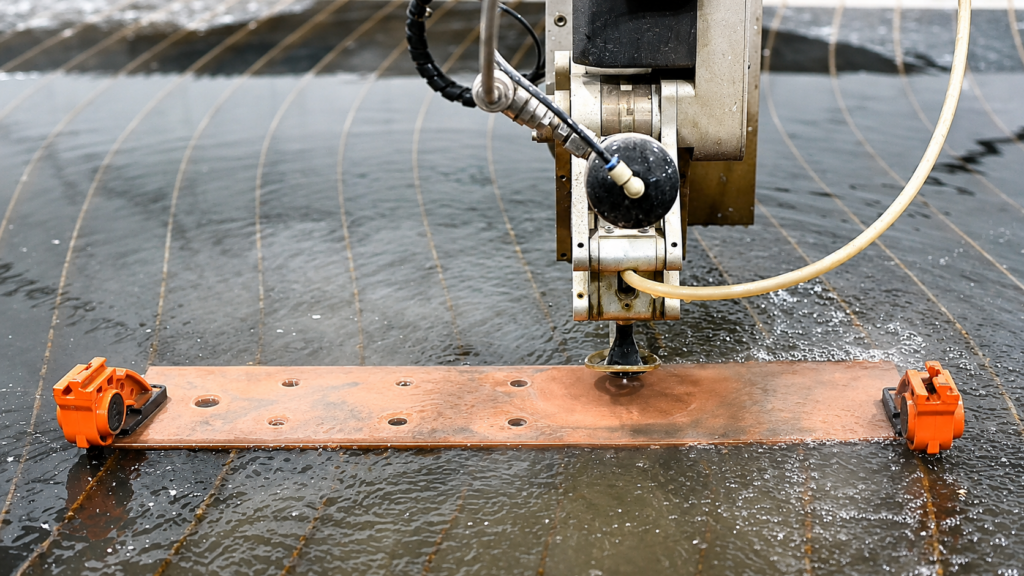
Waterjet Cutting Copper Busbars Without Heat
Copper busbars are critical for distributing power throughout switchgear, power distribution units (PDUs), UPS systems, and electrical cabinets. As AI workloads continue to grow, busbars are becoming larger, thicker, and more complex.
Unlike laser or plasma cutting, abrasive waterjet cutting uses a high-pressure stream of water and abrasive to cut copper without creating a heat-affected zone (HAZ). This process preserves the material while producing accurate, high-quality parts.
Benefits of waterjet cutting copper busbars include:
- No heat distortion
- Clean edges with minimal burrs
- Excellent dimensional accuracy
- Reduced secondary finishing
- No thermal effects that can alter the material’s properties
Because copper reflects and conducts heat so efficiently, thermal cutting methods can present challenges. Waterjet cutting eliminates those concerns and delivers consistent results across a wide range of material thicknesses.
More Than Copper: Waterjets Cut a Variety of Data Center Components
Copper busbars are just one of many parts a waterjet can produce for the data center industry. The same machine cuts materials used for:
- Stainless steel brackets, supports, and cable management components
- Aluminum electrical enclosures and cooling components
- Garolite and Glastic materials such as G10 and FR4 for electrical insulation panels
- Rubber gaskets and plastic components used in electrical cabinets and cooling systems
Since a waterjet needs no dedicated tooling, manufacturers can quickly switch between materials and part designs. This flexibility makes waterjets an excellent choice for custom, high-mix production like switchgear and electrical enclosure fabrication.
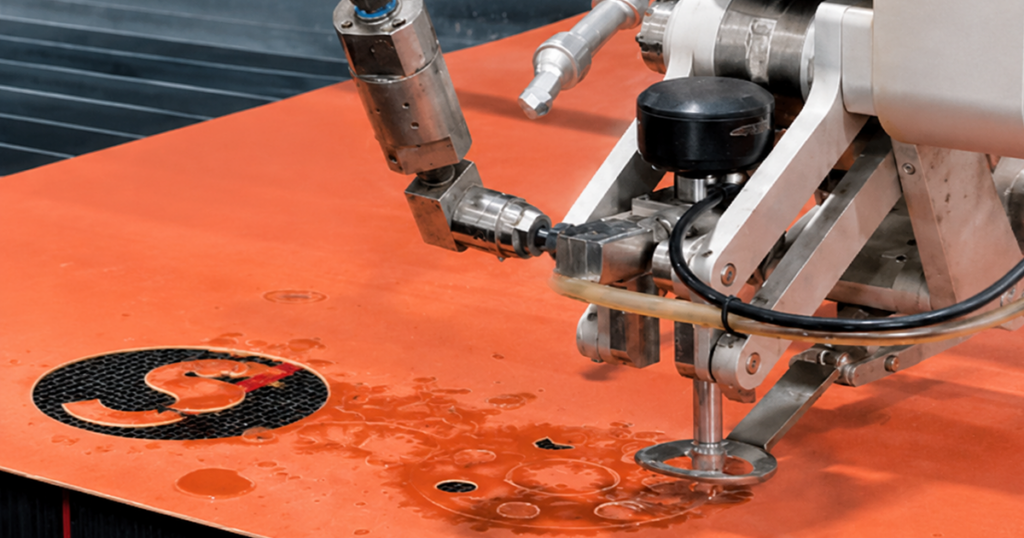
Supporting Data Center Manufacturing
Companies that manufacture switchgear, electrical enclosures, cooling systems, and other data center equipment need machines that handle a variety of materials with precision. A single waterjet can cut copper, aluminum, stainless steel, composites, plastics, rubber, and more, helping fabricators produce a wide range of components without swapping equipment or tooling between jobs.
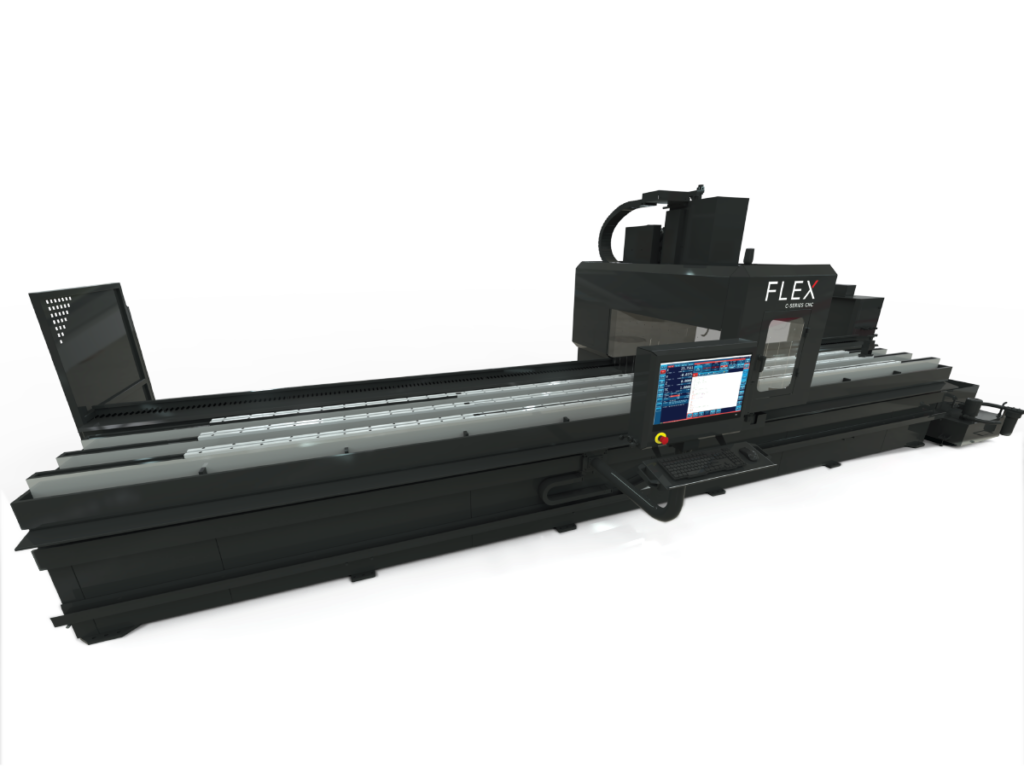
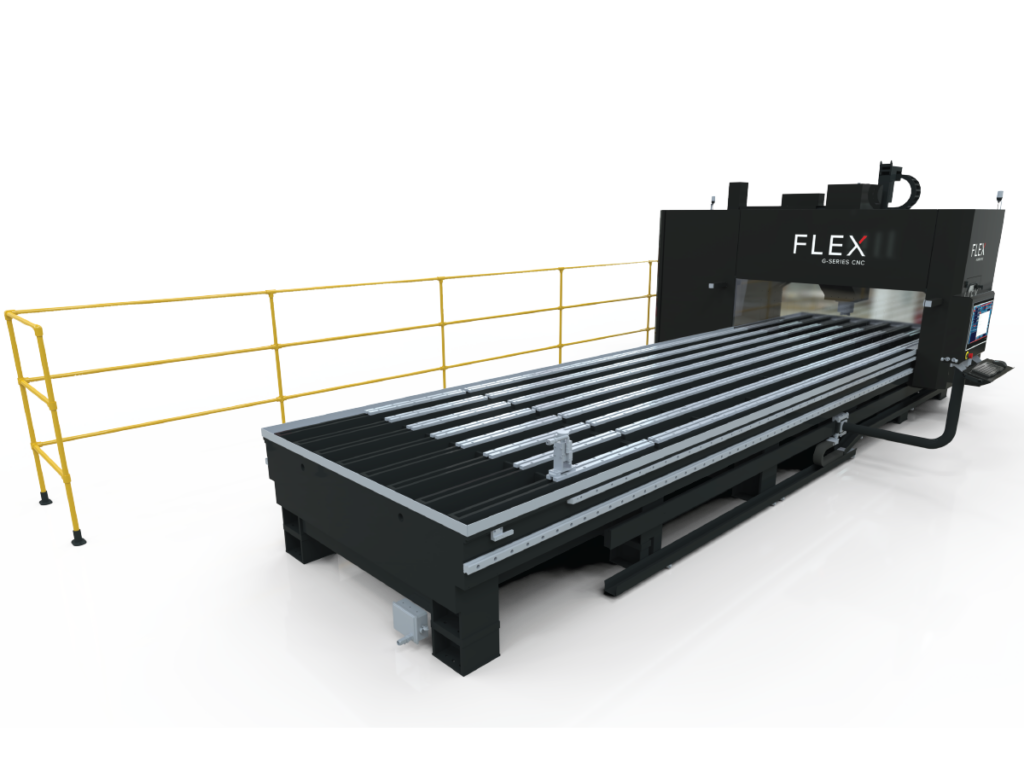
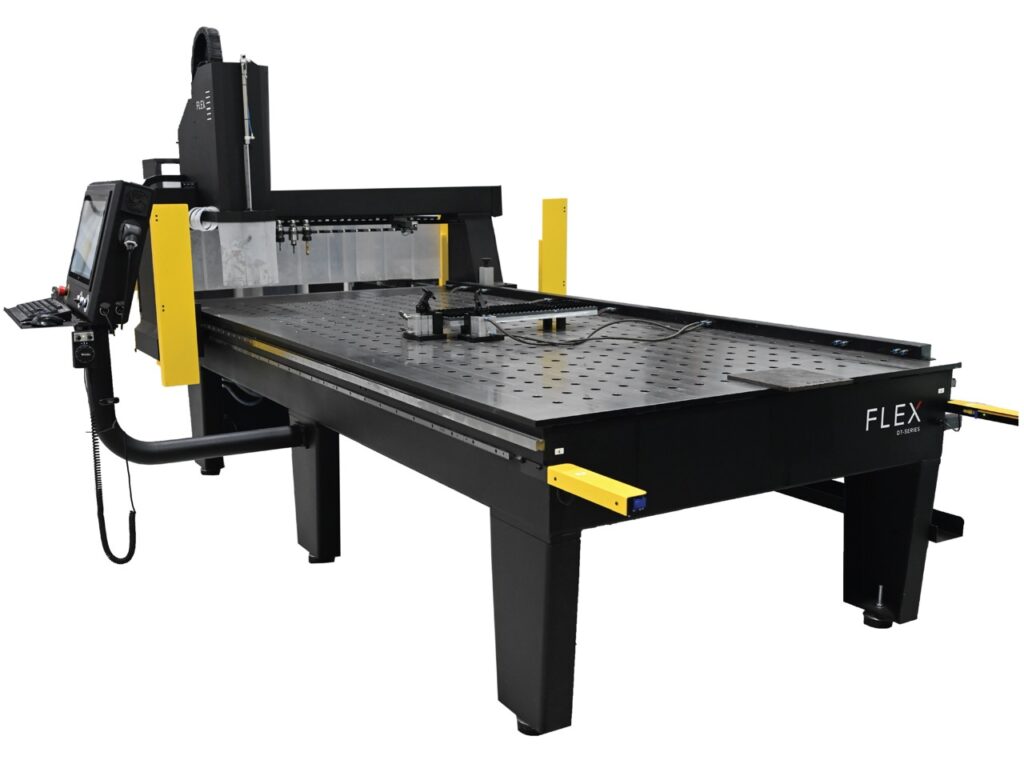
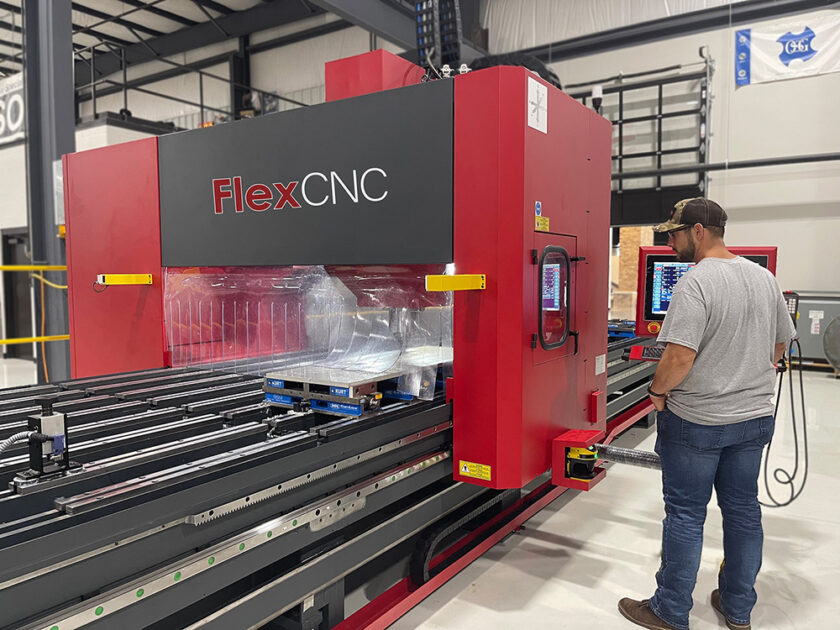
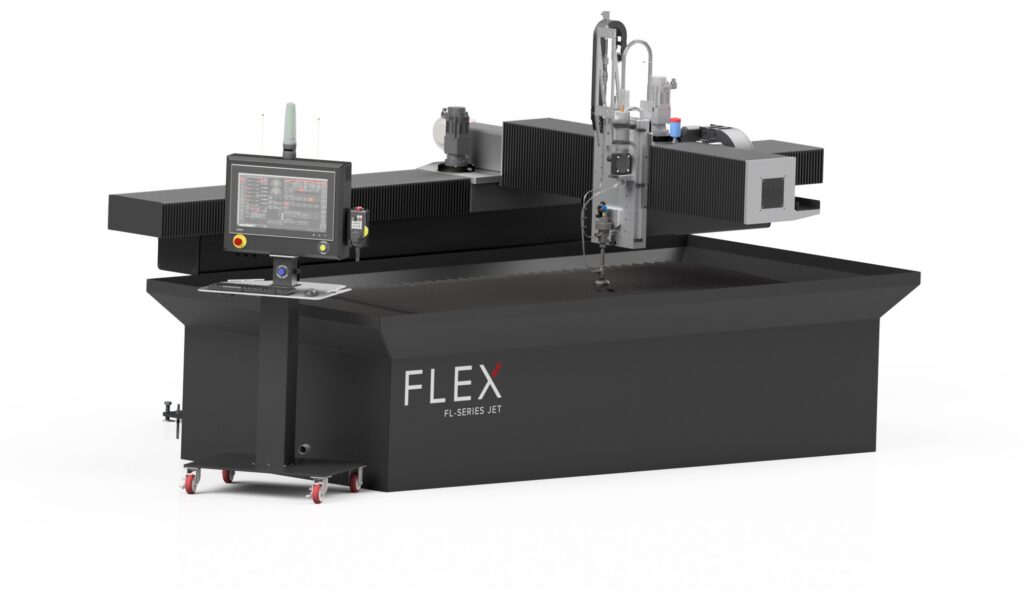
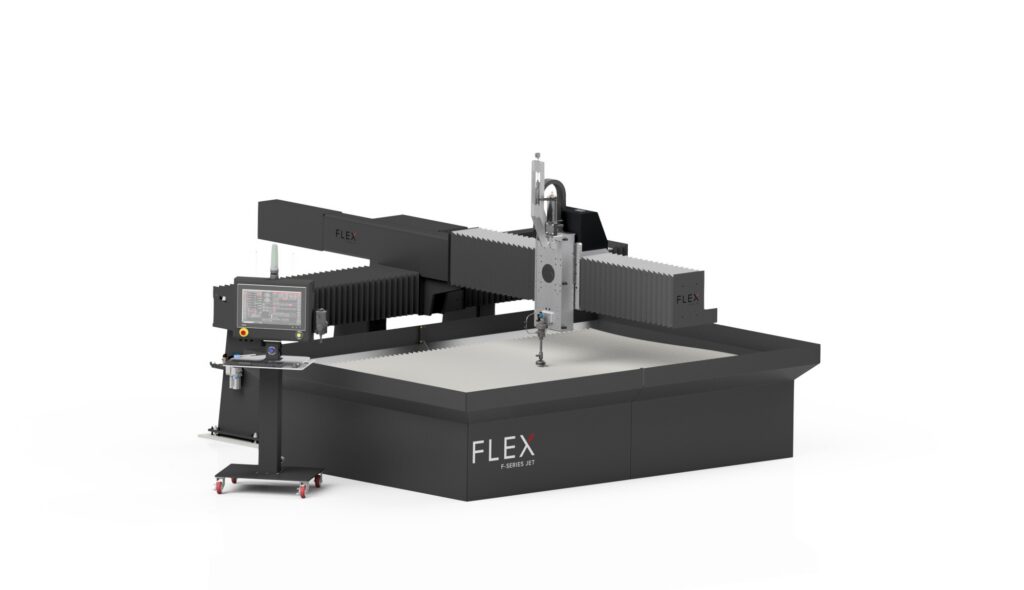
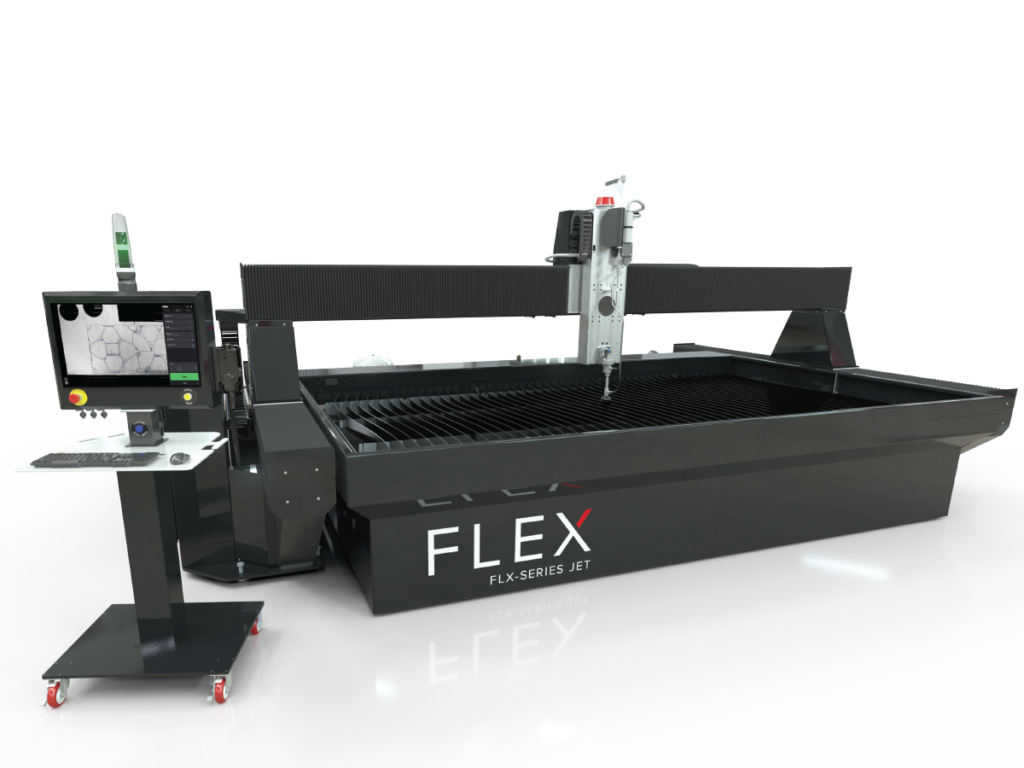
Why Choose the FlexJet Waterjet?
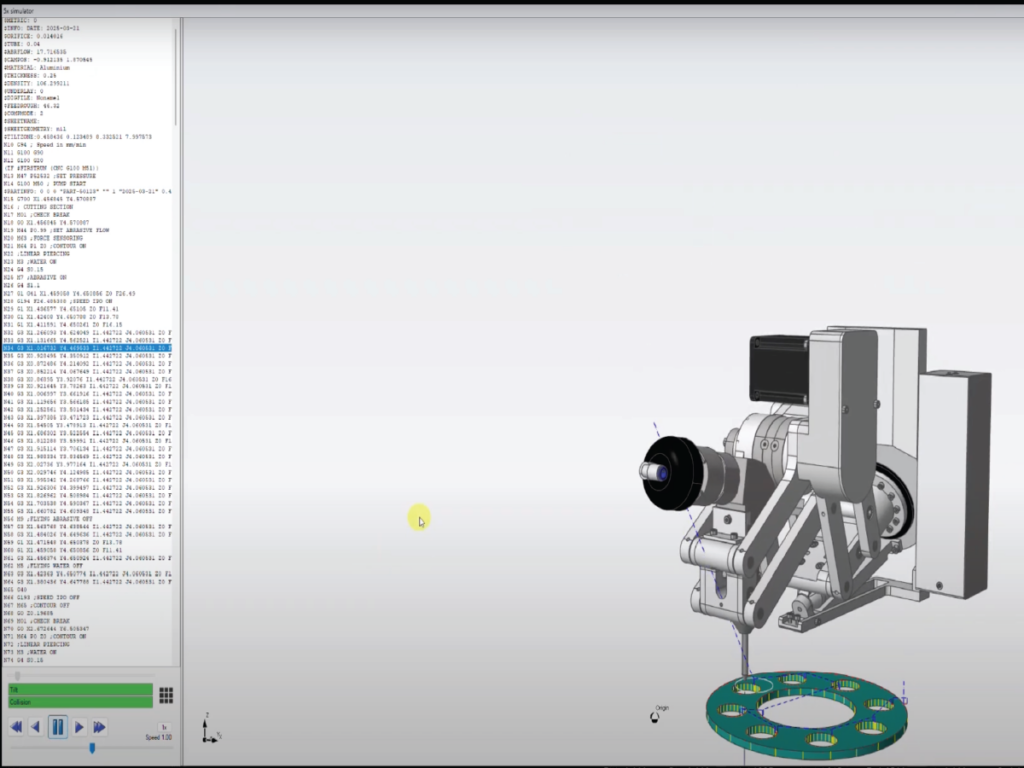
Cutting speed and accuracy come down to more than water pressure. FlexJet’s acceleration lets the cutting head reach top speed and change direction faster, which matters most on parts with tight corners, slots, and intricate profiles, like the geometry common in busbars and electrical enclosures. Faster acceleration means shorter cycle times without sacrificing edge quality or dimensional accuracy.
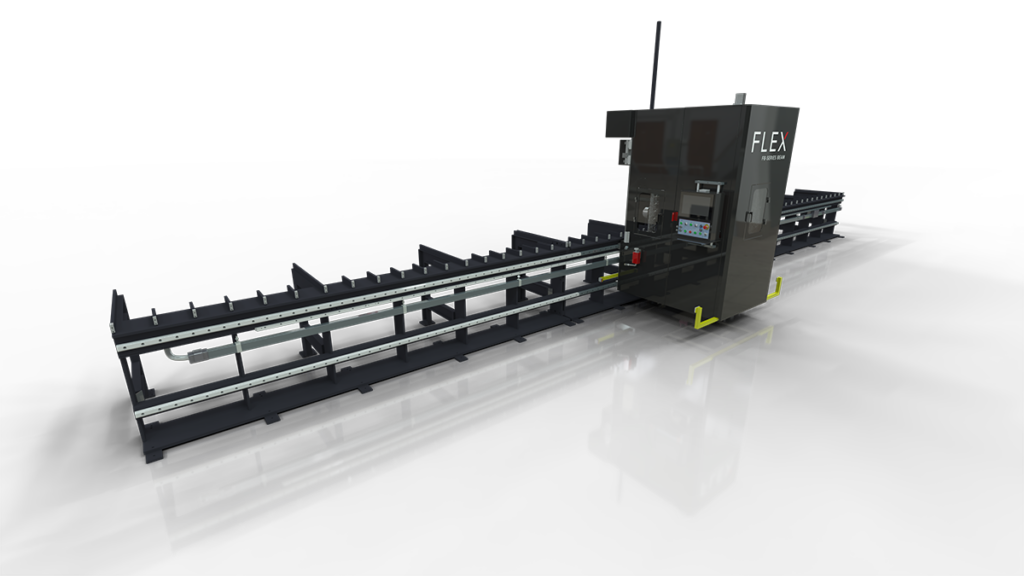
FlexJet is also built around configurability. Shops can spec the machine to match their actual production, not a one-size-fits-all layout: small-format tables for tight shops or large tables that handle multiple sheets at once, 5-axis or conventional cutting heads, and Z-axis travel from 10″ to 36″ for thin busbars or thick stainless stock. That flexibility means a shop cutting thin copper busbars one day and thick stainless brackets the next can run both jobs on the same machine without compromise.
For fabricators serving the data center market, where part mix changes fast and lead times are tight, that combination of speed and configurability means more throughput and less time reconfiguring the shop floor for each new job.
Frequently Asked Questions
Can waterjets cut copper busbars? Yes. Abrasive waterjet cutting produces clean, accurate cuts in copper busbars without creating a heat-affected zone, preserving the material’s electrical and mechanical properties.
What’s the advantage of waterjet over laser cutting for copper? Copper reflects and conducts heat efficiently, which makes laser cutting inconsistent on the material. Waterjet cutting avoids heat entirely, so it delivers consistent edge quality and dimensional accuracy regardless of copper’s thermal properties.
What other data center components can a waterjet cut besides copper busbars? A single waterjet can cut stainless steel brackets and cable management hardware, aluminum enclosures and cooling components, G10/FR4 insulation panels, and rubber or plastic gaskets used in electrical cabinets.
Does FlexJet require different tooling to switch between materials? No. FlexJet needs no dedicated tooling, so shops can move between copper, aluminum, stainless steel, and composites on the same machine without changeover delays.
Ready to See What FlexJet Can Cut?
Whether you’re manufacturing copper busbars, electrical enclosures, structural components, or other parts for the growing data center industry, FlexJet is built to handle a wide range of materials with speed and precision.
Contact us today to learn more about the FlexJet Waterjet, request a live demonstration, or discuss your application with one of our waterjet specialists. We’ll help you determine if FlexJet is the right solution for your shop.
