
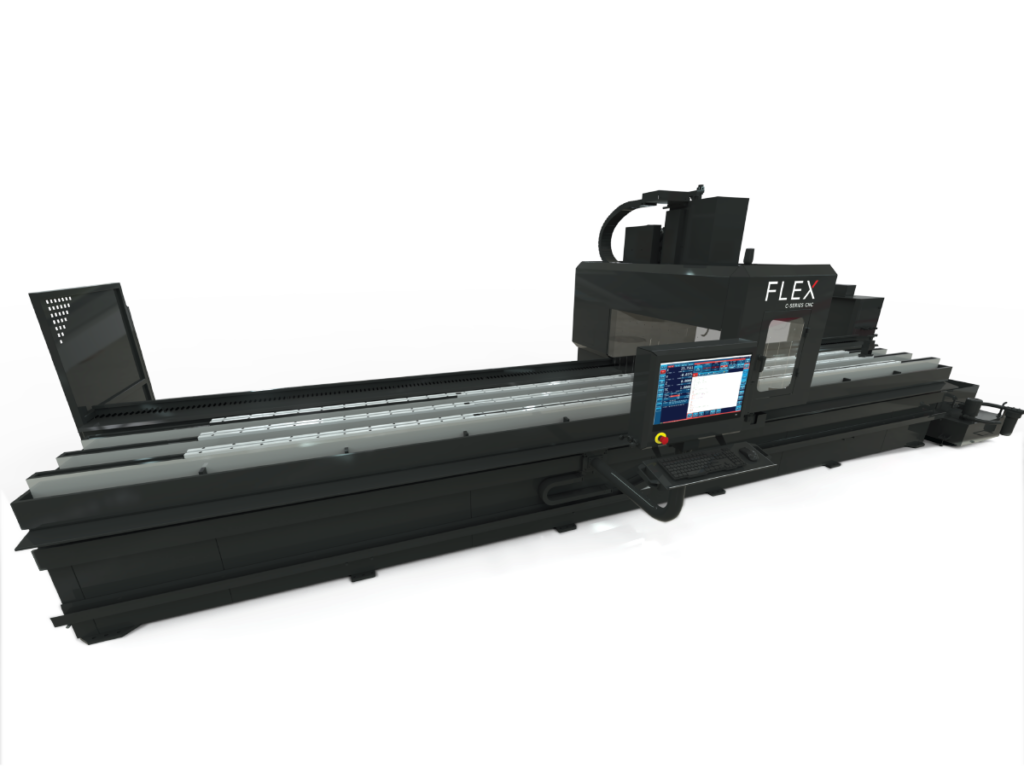
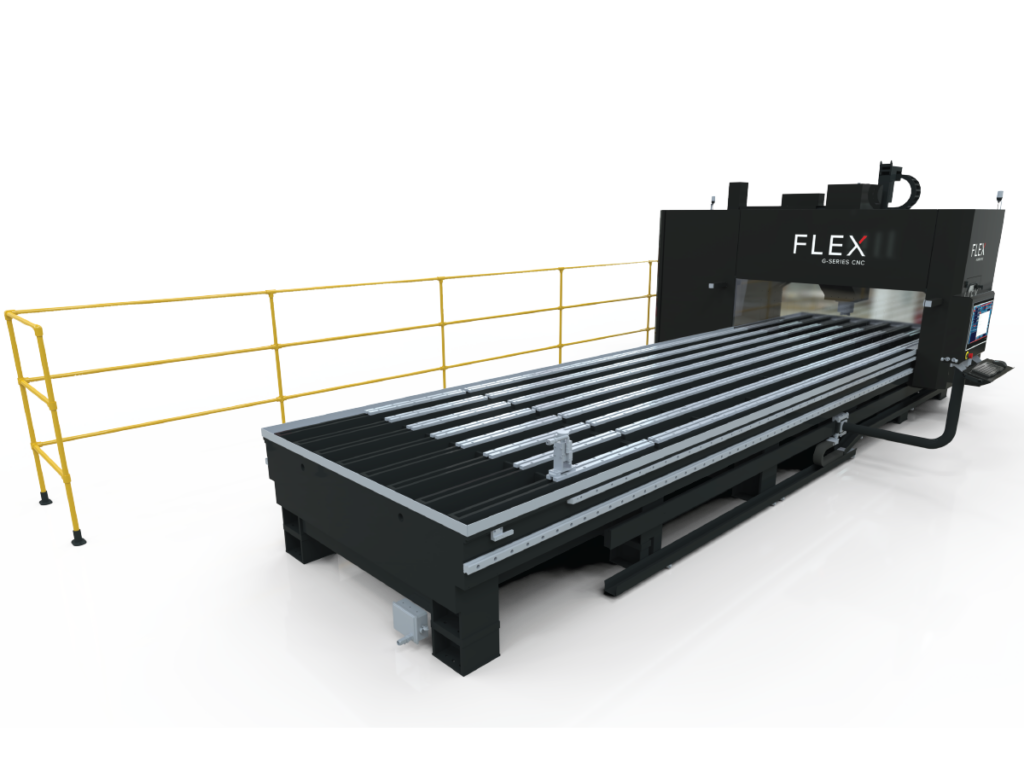
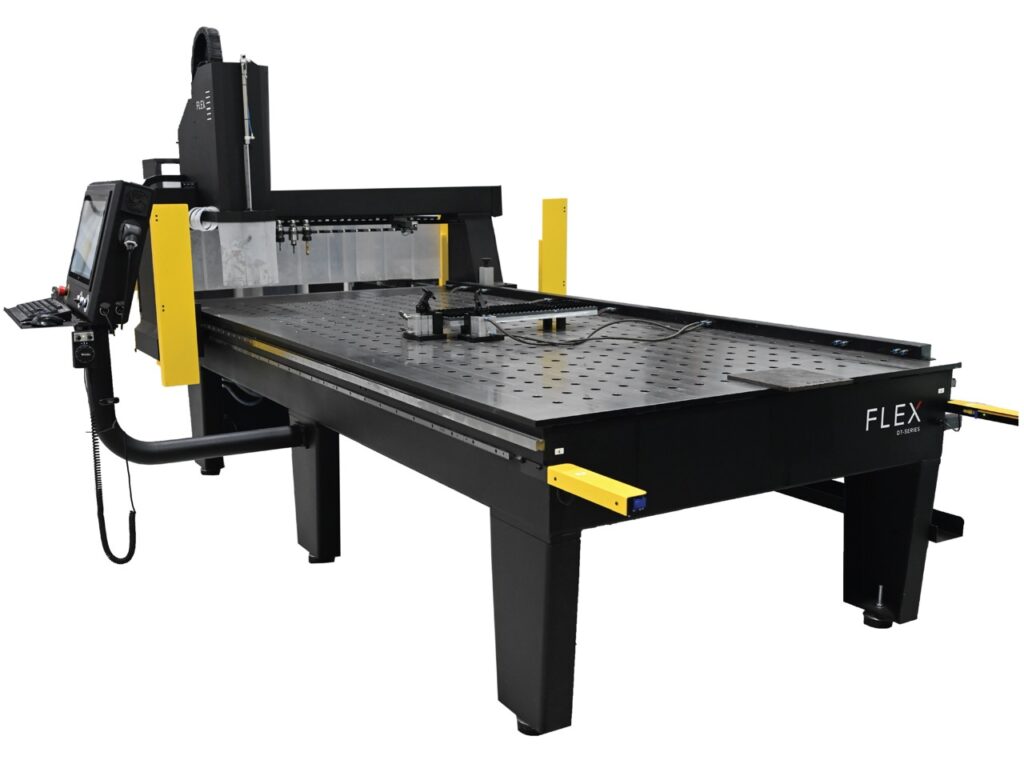
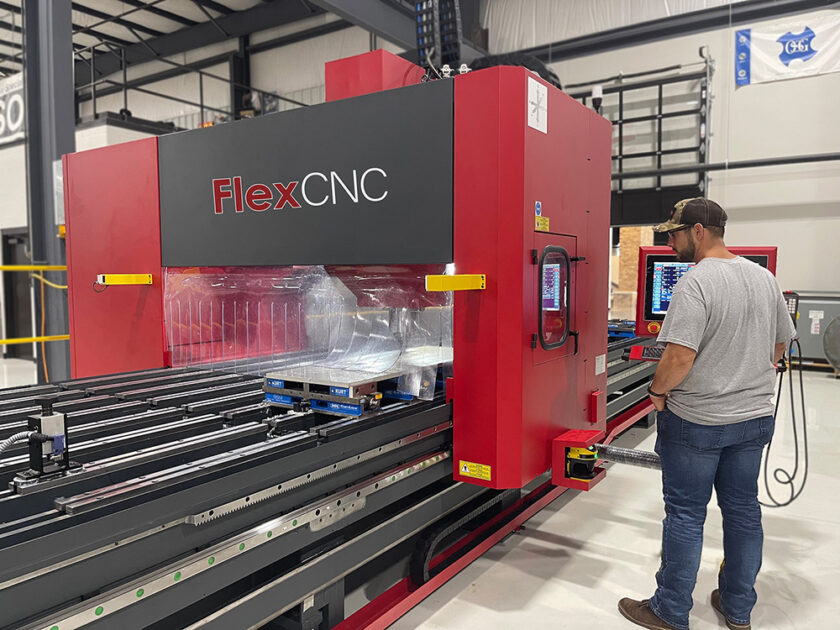


On most CNC machines, the spindle sits idle far more than it should. The culprit is rarely a programming problem or a capacity issue. It’s setup. For the machinist, that means another round of tedious indicate-in work before the first cut runs. For the shop, it means lost spindle time on every job, every changeover, every shift.
The Renishaw Probing Package for the FlexCNC automates workpiece location, tool measurement, and in-process inspection without requiring operators to stop the machine or leave the machining environment. This article covers what the system does, how it works, and where the return comes from, both on the floor and on the books.
What Is the Renishaw Probing Package for the FlexCNC?
The package consists of three integrated components:
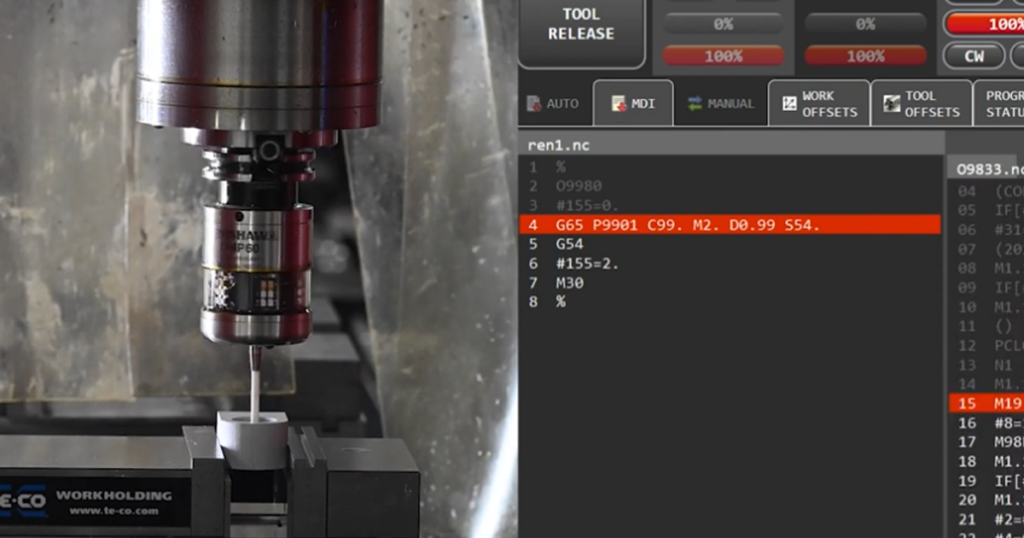
- A spindle-mounted workpiece probe that touches off on part surfaces and automatically establishes work coordinate offsets
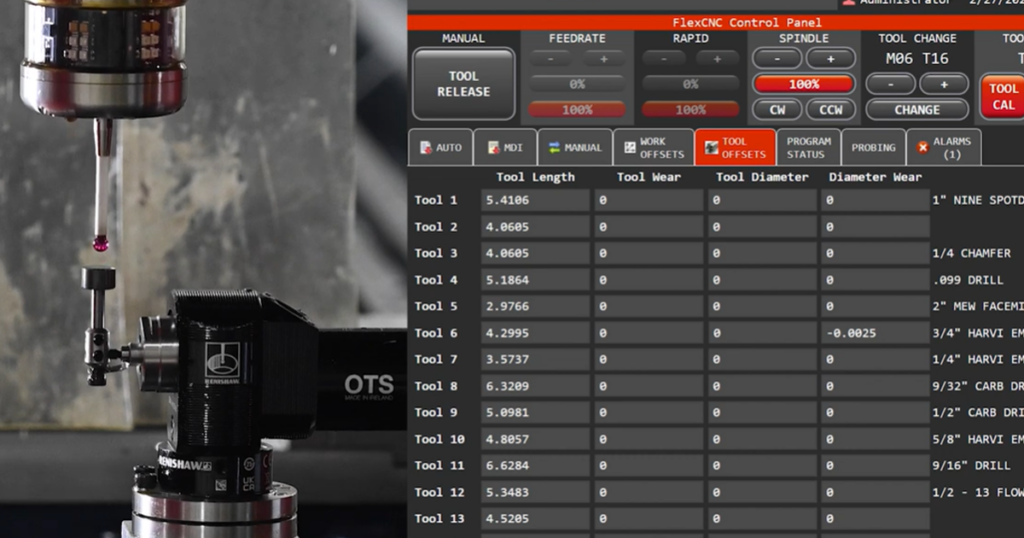
- An Optical Tool Setter (OTS) mounted to the machine bed for non-contact tool length and diameter measurement.
- CNC-integrated probing cycles that trigger automated measurement, offset updates, and inspection routines without manual intervention.
Unlike standalone presetters or external CMMs (coordinate measuring machines), the system operates entirely within the machining environment. Measurement data is fed directly into the CNC control and applied immediately within the same cycle.
How Does the Renishaw Probe Reduce Setup Time?
Anyone who has spent 30 minutes indicating in a complex part knows how much of the day that work can eat up. It’s repetitive, sensitive to small errors, and has to be done right every time, or the first part is scrap. The probing system replaces that process entirely. It measures the actual part position after fixturing and automatically calculates the correct work offsets.
THE IMPACT: On complex components, 90% or more reductions in setup time are achievable. The machine completes in under two minutes what used to take 20 to 30.
Does the Part Need to Be Perfectly Straight in the Fixture?
NO. This is one of the most practical advantages of the system, and one that machinists working with large or awkward parts will appreciate immediately. The probe automatically updates the G54 work coordinate offset, which is the reference point the machine uses to know where the part is in space. Traditionally, that offset is entered manually and assumes the part is fixtured in a known, consistent position.
With the Renishaw system, the probe measures the part’s position after loading and writes the corrected G54 offset into the control. Variations such as rotation or shifting are automatically measured and compensated. The machine adapts to the part as loaded, without the need for re-indicating or re-fixturing.
Where Can the Work Zero Point Be Set?
Anywhere there is a measurable feature. The probe is not limited to a physical corner or edge. For a large bore, the probe locates the hole’s center and sets the datum there, which is often the more accurate and practical reference point for the part geometry. No more trying to indicate off a corner that may not represent the true datum.
The system also compensates for clamp-induced movement, fixture wear, and positioning inconsistency. On rotary tables, trunnions, and tombstone fixtures, the probe handles alignment without operator intervention. Setup quality is consistent across every operator and every shift, which takes the pressure off individual machinists to get it perfect by hand every time.
How Does the System Verify Tool Condition?
Incorrect tool length offsets and undetected tool breakage are among the most common causes of scrapped parts and machine crashes. For a machinist running a long cycle or walking away from the machine, the uncertainty of not knowing whether a tool broke mid-run is a real problem. The damage is not just the part. It’s the workholding, the spindle, and the schedule.
The Optical Tool Setter measures tool length and diameter automatically, updating offsets without operator input. Before cutting, the system ensures the tool is present, intact, and within tolerance; if a tool breaks, the machine detects it. OTS also compensates for tool wear and regrinding, sustaining dimensional accuracy in long production runs.
Can the FlexCNC Replace CMM Inspection for Some Features?
YES, for many feature types. Traditional quality control means moving finished parts to a CMM, often hours after machining is complete. By the time a defect surfaces, several more parts have run with the same problem. The scrap compounds before anyone knows it exists, and the machinist who ran the parts is left explaining what went wrong.
With the Renishaw system, the FlexCNC measures critical features during and after machining, directly in the machine environment. If a dimension is out of tolerance, the control adjusts offsets before the finishing pass. Machinists verify the part’s quality before it leaves the fixture, rather than after inspection rejects it.
Inspection data is generated directly from the CNC control, supporting SPC workflows, first-article inspection documentation, and quality reporting requirements without a separate measurement step.
What Does the Probing Package Enable for Lights-Out Machining?
Lights-out machining only works reliably when the machine can verify its own setup state. For a machinist starting a long, unattended run, the question is always the same: if something goes wrong mid-cycle, will the machine catch it or keep cutting? A wrong-part load or mis-seated fixture detected an hour into a cycle can mean a scrapped part, damaged workholding, and a lost shift.
The Renishaw probing system confirms the correct workpiece is loaded and checks fixture seating, clamping, and tool condition before machining. These safeguards are especially valuable in mixed-part manufacturing. If an issue is detected, the machine halts before damage occurs, giving machinists confidence to run unattended.
For operations looking to increase utilization during second and third shifts, automated process verification is not a convenience. It is the prerequisite.
What Is the Financial Return on a Probing Package?
In most production environments, return on investment is typically achieved in under one year. Setup labor savings and quality performance improvements are the fastest-moving variables. The return runs through several channels at once:
- Immediate Setup Labor Savings: Drastically reduces manual indicate-in time, especially in high-mix environments where machines change over frequently.
- Lower Scrap and Rework Costs: Drops financial loss through real-time, in-process error detection.
- Reduced CMM Queue Time: Shrinks the bottleneck by allowing many features to be verified directly at the machine.
- Maximized Spindle Utilization: Climbs consistently because idle time tied to manual indicate-in procedures and offline inspection is reduced.
Labor efficiency improves as well. With automated setup verification and in-process inspection handling much of the monitoring work, operators can oversee more machines at once without increasing risk. That changes the math on operator-to-machine ratios in a meaningful way.
Who Should Consider the Renishaw Probing Package?
The package is particularly well-suited for:
- Job shops and contract manufacturers running frequent changeovers, mixed-part schedules, and tight-tolerance components
- Aerospace, defense, and energy sector manufacturers where part complexity, material cost, and dimensional requirements demand process certainty
- Operations pursuing lights-out or minimally attended machining where automated verification is a requirement, not a preference
- Facilities producing large-format or high-value parts where a single scrap event carries significant financial consequence
- Quality-driven manufacturers implementing SPC, first-article inspection, or rigorous quality documentation programs
More Uptime, Less Scrap, Less Rework
The Renishaw Probing Package does not change what the FlexCNC machines. It changes how reliably and efficiently the machine does it. For the machinist, that means less time on tedious setup work and more confidence that the machine is running correctly. For the shop, it means consistent results across operators, shifts, and part families, with less scrap and less dependence on CMM availability.
Watch the Step-by-Step Setup
Want to see how easy it is to automate your workflow? Watch this technical walkthrough to see exactly how the Renishaw probe eliminates manual entry and significantly reduces setup times directly on the FlexCNC.
