
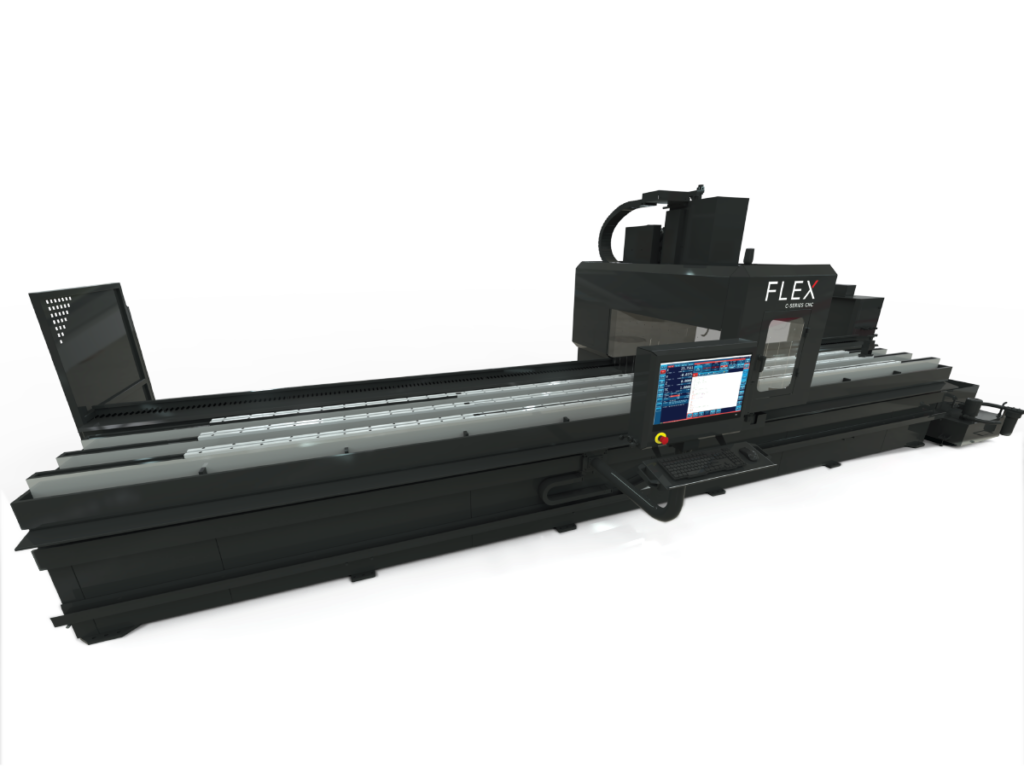
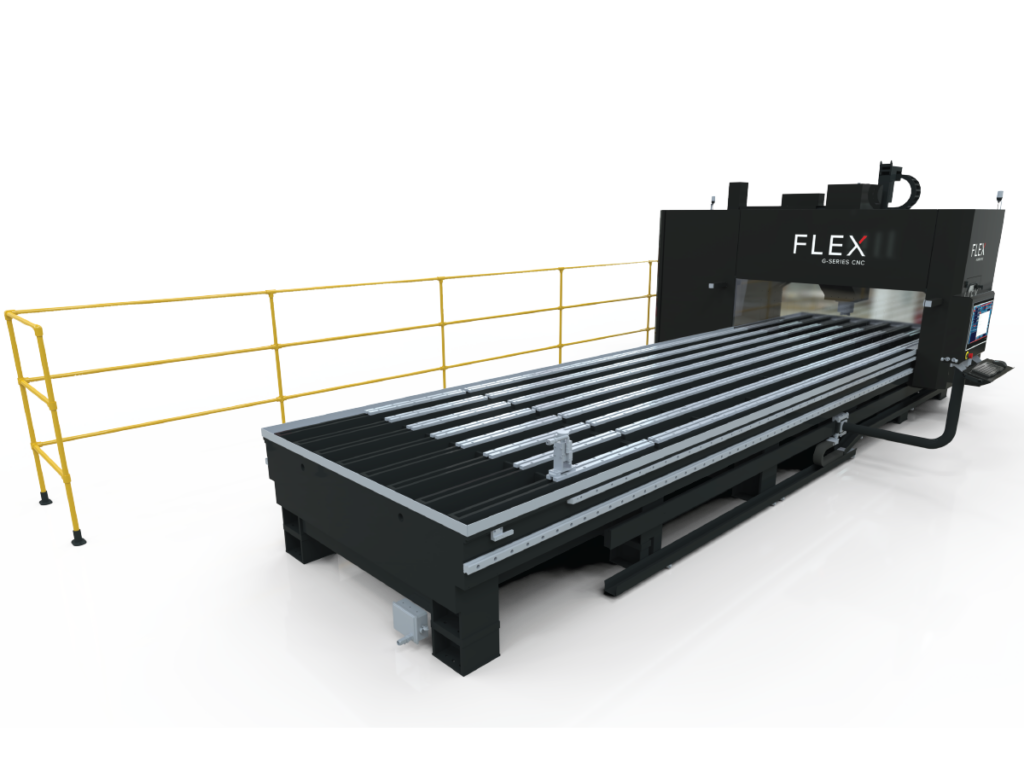
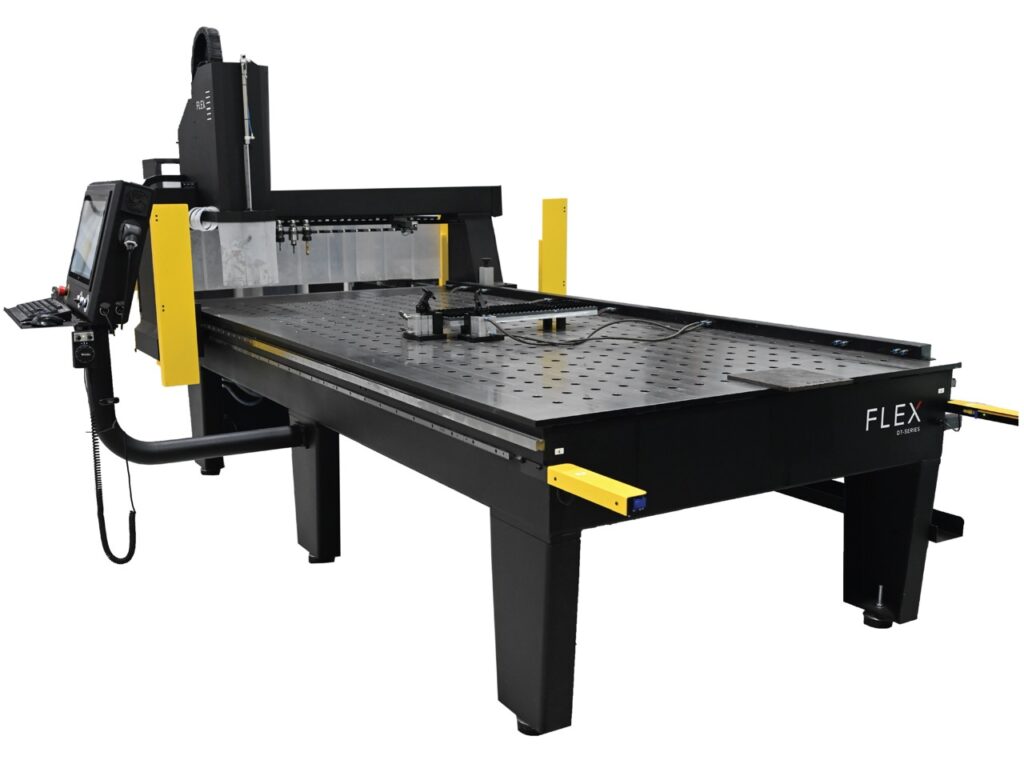
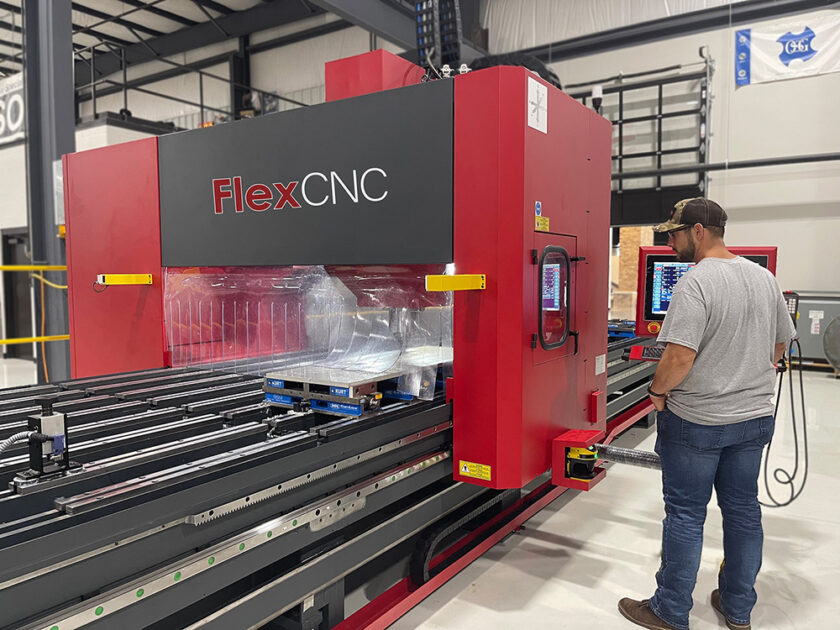
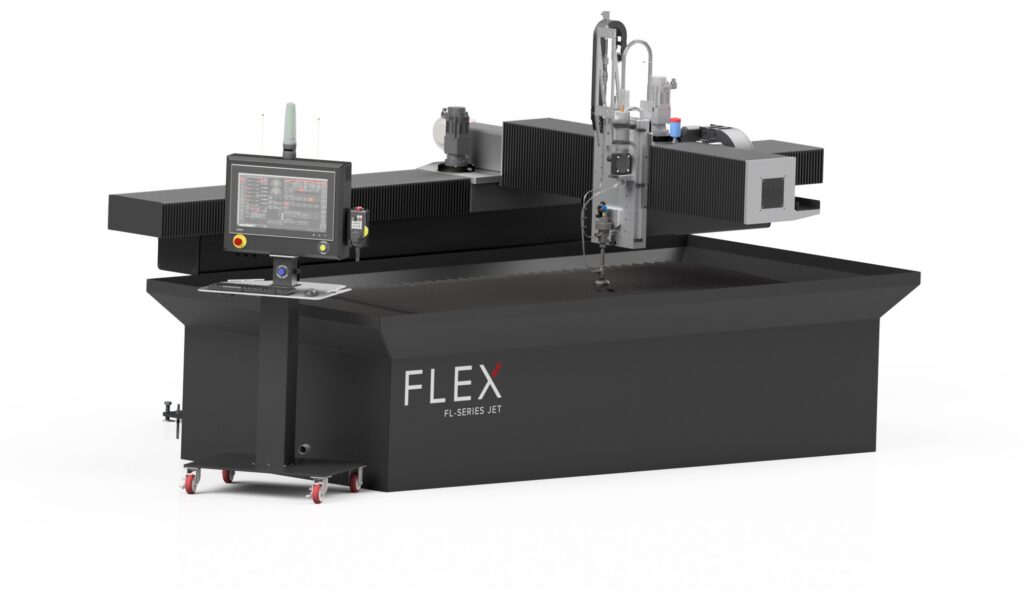
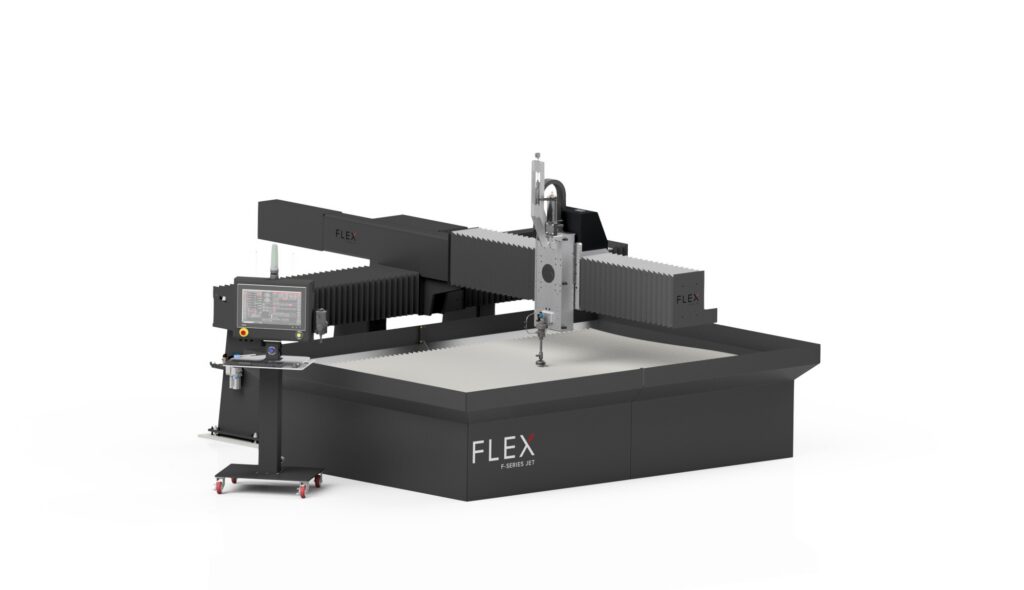
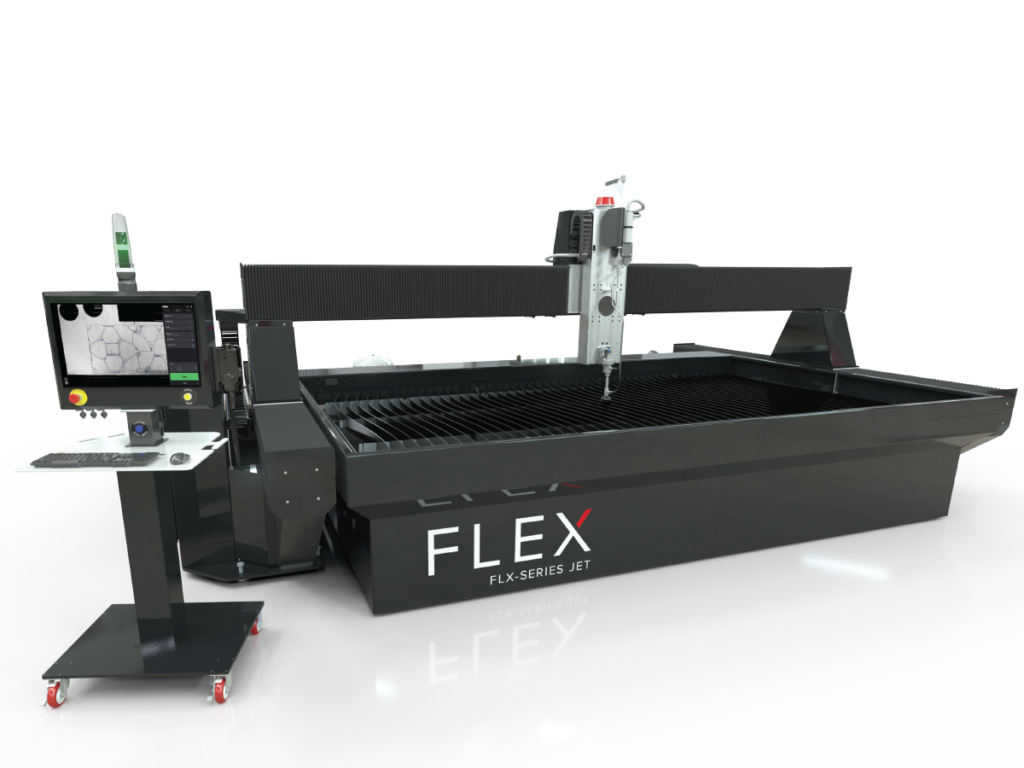

A company exploring waterjet cutting brought their parts to Flex Machine Tools with a challenge: could the FlexJet handle their production run? We cut 40 parts in 36 minutes, weld-ready, with no secondary machining required.
40 total cut parts. 36:10 total cycle time. 2 part designs.
The Situation
A supplier stock-out had left them facing long lead times on a batch of structural steel parts. It’s a situation a lot of shops know well. When your outside cutting vendor is backed up, your production schedule doesn’t wait. Weld schedules slip, assembly gets pushed, and you’re left explaining to your customers why a flat part is holding up their order.
Speed wasn‘t their only concern. They also wanted to know whether waterjet quality could meet their standards. Specifically, could parts come off the table and go straight to welding, without any grinding, milling, or secondary cleanup?
The parts & material
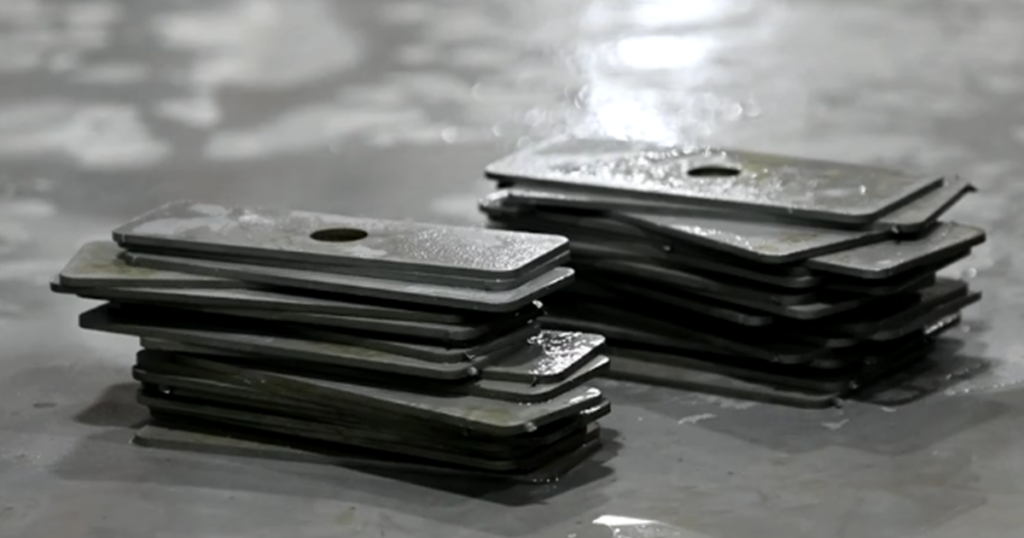
The customer needed 20 each of two similar parts, all cut from a single 5’×10′ sheet of ASTM A36 structural steel at .125″ thick, a common, economical material used widely in fabrication and weldments.
Both parts shared the same profile logic: a rectangular blank with a .750″ center hole and .28″ corner radii to reduce stress concentrations. Part 1 measured 2.69″×6″ and Part 2 measured 2″×6″. Clean geometry, production-friendly nesting.
Machine & cutting parameters
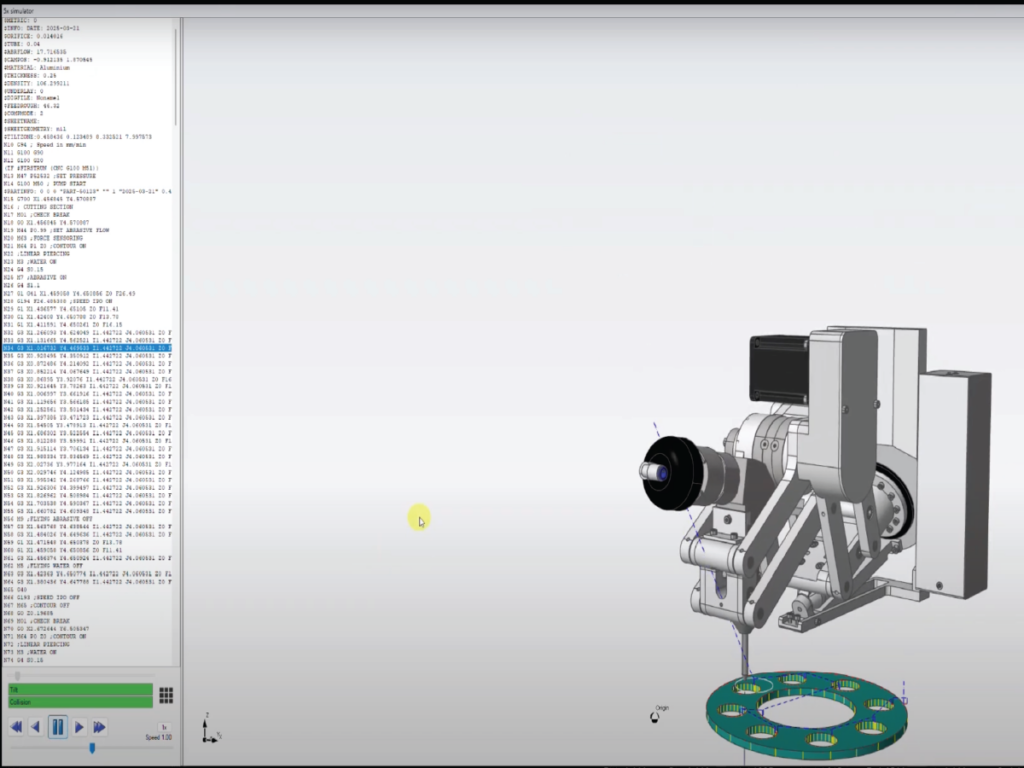
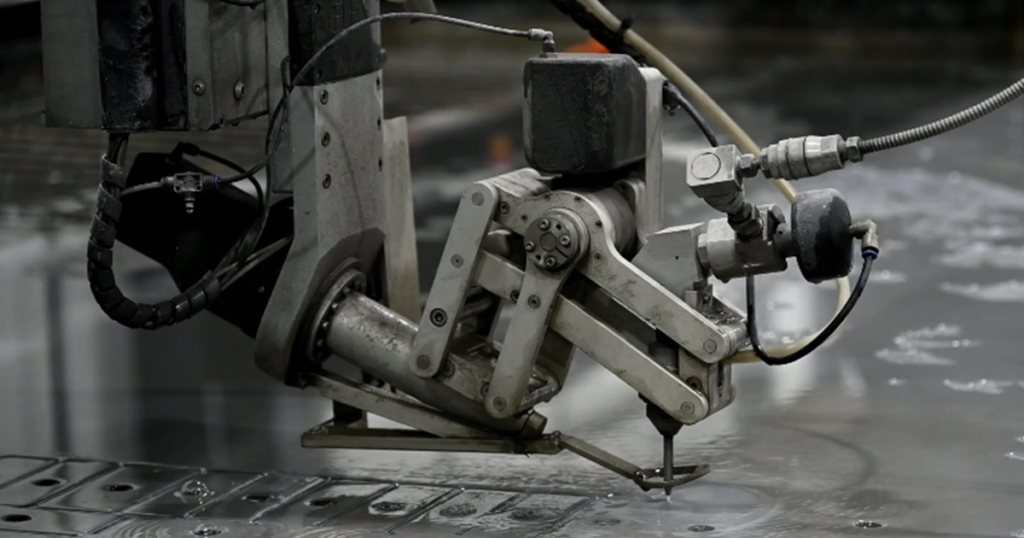
The FlexJet ran with the IGEMS tilter cutting head, a dynamic head that rotates the nozzle angle in real time during the cut. Paired with IGEMS CAM software’s TAC (Taper Angle Control) feature, the machine actively compensated for kerf taper throughout the cut path, producing straight, square edges without any secondary grinding or cleanup.
If you watch the video closely, you can see the tilter head pivoting as it moves through the geometry; that’s TAC doing its job.
Parameter
Material
Cutting head
Orifice / mixing tube
Abrasive
Pump pressure
Cutting speeds
IGEMS features used
Value
ASTM A36 structural steel — .125″ thick, 5’×10′ sheet
Tilter head
.010″ orifice · .030″ nozzle
80 grit garnet
60,000 PSI (WSI pump)
13.01 – 23.24 IPM (varies by feature geometry)
TAC (Taper Angle Control), Bridge feature
Keeping parts under control: the bridge feature
Small parts cut from thin sheet stock can shift, tip, or fall through the slats mid-cut, ruining the part and risking damage to the cutting head. For this run, IGEMS’ bridge feature left small intentional tabs of material connecting each part to the sheet skeleton, keeping everything in place through the full cycle.
Once the cycle finished, parts were simply broken free by hand, and any remaining tab material was knocked off with a bench grinder in seconds. Fast, safe, and effective.
Ready to weld, right off the table
Because the parts were headed straight to welding, the requirements were simple: square edges, consistent geometry, no heat-affected zone. Waterjet delivered on all three. There was no warping from thermal stress, and edge quality and tolerance held consistently across all 40 parts.
After breaking the bridges and drying the parts off, they went directly to the weld table. No deburring, no secondary milling, no straightening. The entire post-process was a bench grinder and a towel.
What this means for your shop
This wasn’t a controlled demo under ideal conditions; it was a real batch of production parts, cut to spec and ready to weld. That’s exactly what in-house waterjet cutting looks like when it’s working.
When you own a FlexJet, you’re not waiting on a supplier’s queue or paying a per-part premium on outside services. You control the schedule. You control the quality. And when a stock-out hits your supply chain, you have a solution sitting on your shop floor.
For shops regularly producing flat-plate parts, brackets, gussets, flanges, and weldments, the economics of bringing that capability in-house add up quickly. If you’ve been on the fence about whether a FlexJet can handle your work, this run is your answer.
Ready to see it cut your parts?
